
October 26, 2026 · Heating
Furnace Repair or Replacement? How to Decide Before Winter in Odessa
If your furnace is under about 15 years old, has a solid service history and the problem is a single part, a repair is usually the smart call. If it's 15 or older, has needed several repairs in the last couple of…

If your furnace is under about 15 years old, has a solid service history and the problem is a single part, a repair is usually the smart call. If it's 15 or older, has needed several repairs in the last couple of winters, or a technician finds a cracked heat exchanger, it's time to price out a replacement. The best time to make that decision is now, in the fall, when you can compare options calmly instead of on the first freezing night of the year.
Here in Odessa, our furnaces sit quiet for most of the year and then get asked to work hard during a few cold snaps and the occasional hard freeze. That stop-and-start pattern means problems tend to show up all at once, usually on the first chilly evening. Below is how we help homeowners sort out a fix from a replacement, in plain terms.

Signs a repair is enough
Plenty of furnace problems are small, fixable and nowhere near the end of the road. A repair usually makes sense when:
- The furnace is younger than roughly 15 years and has been maintained.
- It's one failed part, like an igniter, a dirty or worn flame sensor, a capacitor, a pressure switch or a thermostat that isn't talking to the furnace.
- It heats evenly once it's running, and your gas bill hasn't jumped compared to past winters.
- This is the first real repair in years, not the third one this season.
- The technician finds no safety problems with the heat exchanger, venting or gas connections.
A good example is the flame sensor. It's a small rod that confirms the burners lit. Over a long West Texas summer it can get coated with dust and residue, and the furnace will light for a few seconds and then shut itself off. Cleaning or replacing it is a quick fix, and it's one of the most common calls we get when the heat first comes on. If that sounds familiar, our furnace repair service in Odessa is the right place to start.
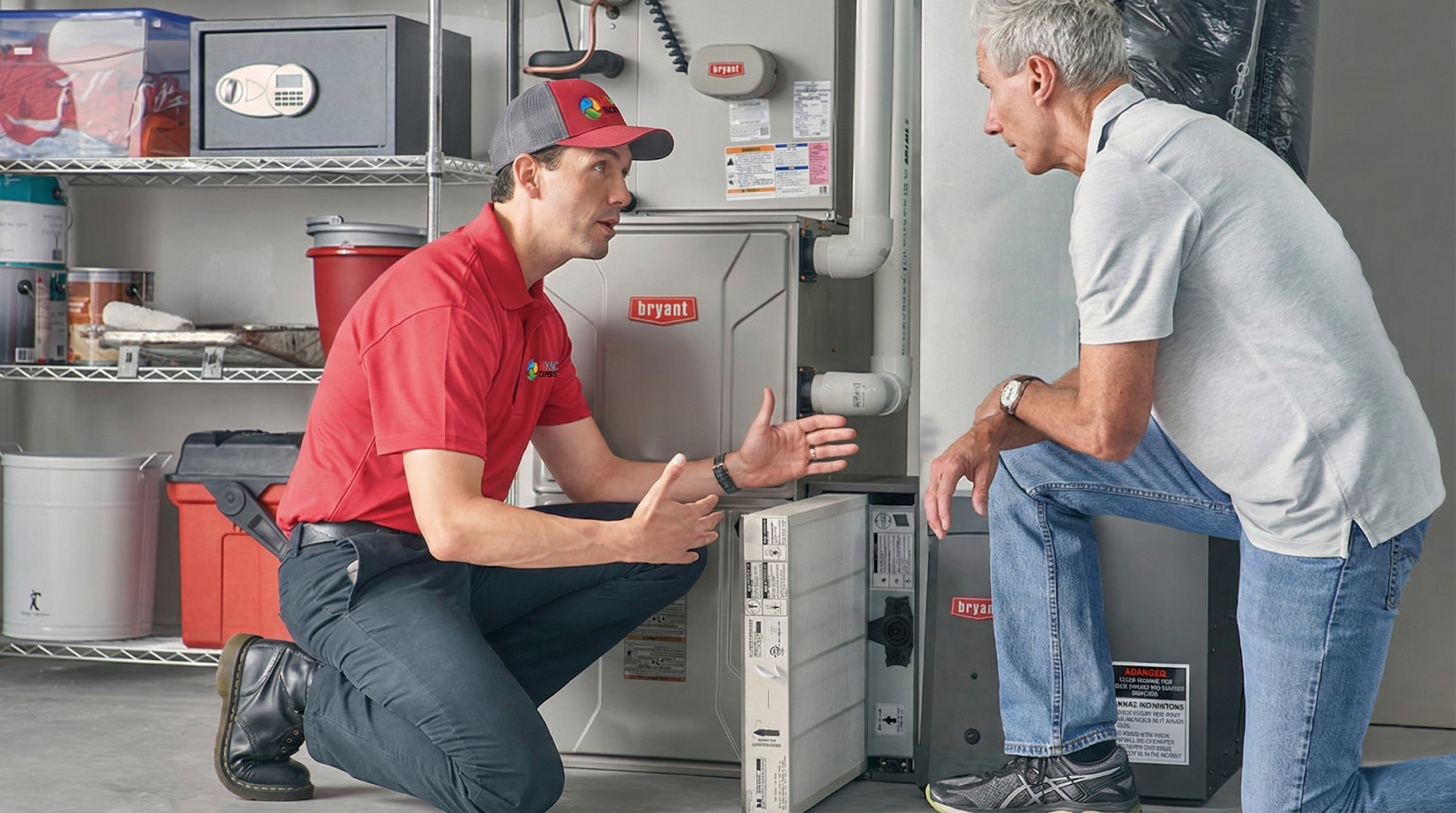
Signs it's time to replace
Age alone doesn't condemn a furnace, but it's the first thing to look at. ENERGY STAR suggests homeowners consider replacing a furnace once it's more than 15 years old, and the U.S. Department of Energy's guidance for contractors says much the same thing: once heating equipment is past about 15 years, usually only minor, low-cost repairs make financial sense. Treat those as rules of thumb, not a countdown clock. A well-kept furnace can outlast them, and a neglected one can fail early.
Replacement starts to make more sense when you see a few of these together:
- Age. The furnace is 15 or older, or you don't know how old it is. The age is usually on the data plate inside the cabinet door, and we're glad to read it for you.
- Repeated repairs. You've called for service more than once in the past two winters, and each visit is a different part. One rule of thumb many contractors use is that if a repair costs close to half of what a new furnace would, it's worth getting a replacement quote before you say yes.
- Heat exchanger trouble. The heat exchanger keeps combustion gases separate from the air you breathe. If it's cracked, it can let carbon monoxide into the home, and manufacturers generally recommend you don't keep running a furnace with a cracked heat exchanger. On an older furnace, this is usually the point where replacement is the safer and more sensible choice. If a technician ever tells you yours is cracked, ask to see what they found.
- Rising bills. Your gas or electric bill keeps creeping up winter after winter even though your habits haven't changed. Older furnaces lose efficiency as they age, and newer models turn more of the fuel into usable heat.
- Comfort problems. Some rooms never warm up, the furnace runs constantly, or it short cycles (turns on and off over and over).
- Warning signs you shouldn't ignore. Rust or soot around the burners or flue, a yellow, flickering flame instead of a steady blue one, or a carbon monoxide alarm. If your CO alarm goes off, get everyone outside first and call for help. Then have the furnace checked before you use it again.
Every home should have working carbon monoxide detectors, especially near bedrooms. This is general safety guidance, not a diagnosis, so if anyone in your home feels sick, go to a doctor or call 911.
What affects the cost
Every home is a little different, so we don't quote a replacement over the phone. We give you a price after a technician looks at your system in person. Here's what goes into that price:
- The size of furnace your home needs, which depends on square footage, insulation, windows and ductwork, not just the size of the old unit.
- Efficiency level. Standard and high-efficiency furnaces cost different amounts up front and to run.
- Fuel and system type: gas furnace, heat pump or a dual fuel setup (more on those below).
- Installation details, such as where the furnace sits (attic, closet or garage), venting changes, gas line work and whether the ductwork needs repairs.
- Whether it makes sense to replace the indoor and outdoor units together. Our older post on replacing your air conditioner and furnace at the same time explains why matched systems matter.
- Permits and any upgrades you choose, like a smart thermostat or better air filtration.
On a repair, you get a written diagnosis and price before any work starts, and nothing happens without your OK. If the repair and a replacement are close in cost, we'll show you both so you can compare them side by side.
Gas furnace, heat pump or dual fuel for our short winters
Odessa winters are short and mostly mild, with a few hard freezes mixed in. That changes the math compared to colder parts of the country.
Gas furnace
A gas furnace puts out strong, steady heat no matter how cold it gets outside, which is reassuring during a hard freeze. Many Odessa homes already have gas service, so swapping like for like is often the simplest installation.
Heat pump
A heat pump heats and cools with one system and works well through most of our winter days. Because our heating season is short and our cooling season is long, a heat pump can make sense when your air conditioner also needs replacing. Older heat pumps can struggle on the coldest nights, so ask about backup heat. If yours is already blowing cold air in heat mode, read our guide on why a heat pump blows cold air in heating mode.
Dual fuel
A dual fuel system pairs a heat pump with a gas furnace. The heat pump handles the mild days, and the furnace takes over automatically when it gets really cold. For a lot of West Texas homes, that's a good balance of efficiency and peace of mind during a freeze.
There's no single right answer for every house. We'll walk you through the options for your home, ductwork and budget during the visit. You can also browse all of our heating services.
Financing and timing: replacing in fall vs on an emergency night
When you replace matters almost as much as what you replace it with. In the fall you can:
- Get a quote, think it over and ask questions without a cold house rushing you.
- Choose the system and efficiency level you actually want, not just whatever's available that night.
- Schedule the installation at a time that works for your family.
- Look into financing ahead of time.
On an emergency night, the furnace has quit, it's cold inside, and you're making a big decision fast. We'll still help. Call us for same-day and emergency options through our emergency HVAC repair service. But if your furnace is already showing the signs above, a fall inspection gives you more choices.
If the up-front cost is what's holding you back, HVAC Experts offers financing for qualified homeowners through FTL Finance. You can apply online, and once you're approved you can move ahead with an installation or major repair without paying the full amount up front.
Not sure yet? Let's take a look
You don't have to figure this out alone. Our technician will inspect your furnace, tell you honestly whether a repair will carry you through the winter, and, if replacement makes more sense, give you a clear quote with options. We serve Odessa and nearby communities, including Midland.
Call 432-272-5636 or book a furnace check online before the first cold snap.
4.9 · 1,899 Google reviews
Need help at home?
Call 432-272-5636 for a free estimate.