
May 19, 2026 · Indoor Air Quality
HVAC System Duct Cleaning: Worth It or Just Hot Air?
Discover when HVAC system duct cleaning is necessary, its benefits, costs, and how to choose pros over DIY for cleaner air and efficiency.
What You Need to Know About HVAC System Duct Cleaning
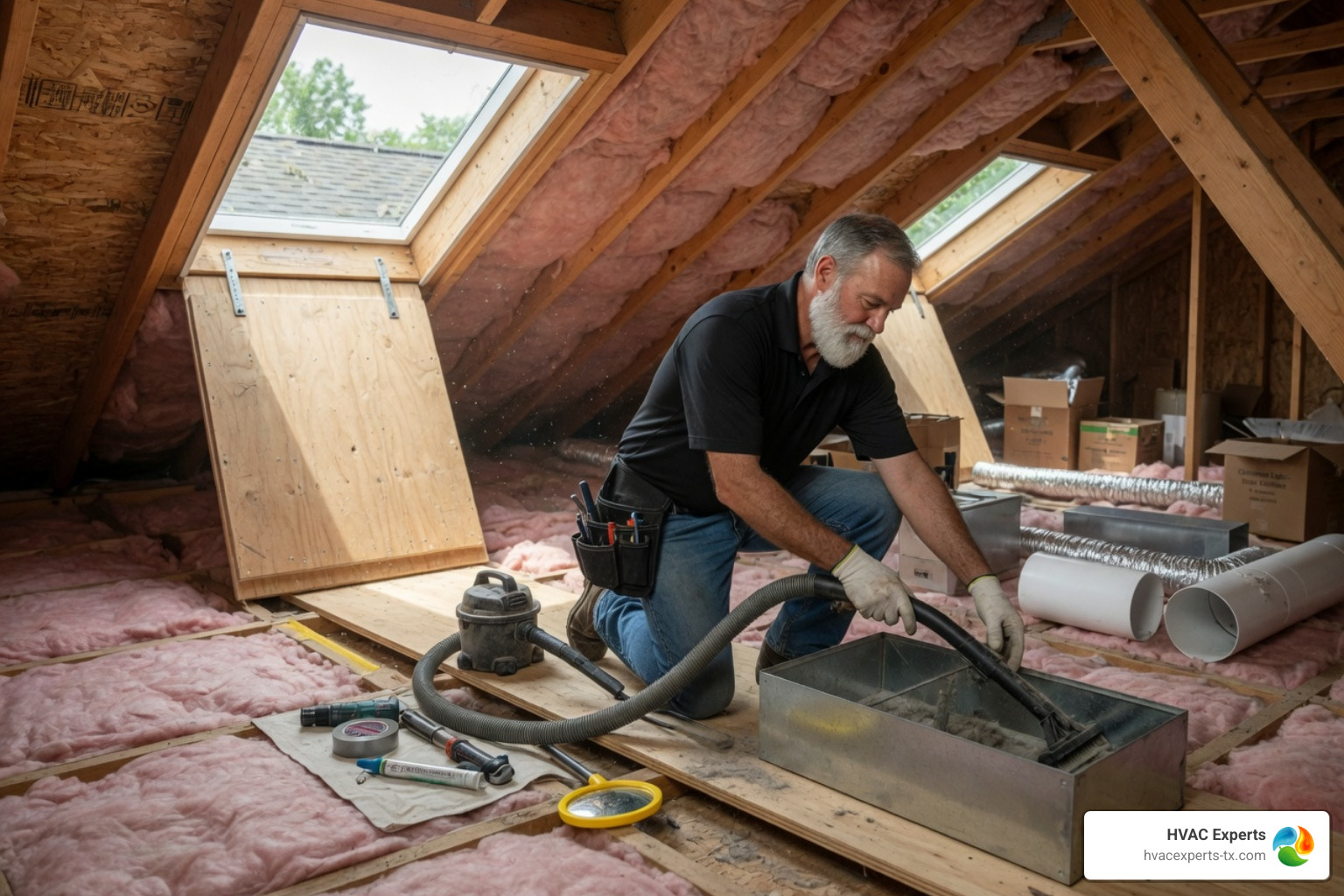
HVAC system duct cleaning is the process of removing dust, debris, mold, and other contaminants from the supply ducts, return ducts, registers, grilles, and core components of your home’s heating and cooling system.
Here’s a quick look at what matters most:
| Question | Quick Answer |
|---|---|
| When is it necessary? | Visible mold, vermin infestation, or ducts clogged with debris |
| How often? | Every 3 to 5 years (NADCA recommendation) |
| Typical cost? | $450 to $1,000 depending on system size and contamination |
| DIY or professional? | Professional — DIY methods can spread contaminants further |
| Biggest benefit? | Cleaner indoor air and better HVAC performance |
| Top red flag? | “$99 whole-house cleaning” offers |
If you live in the Permian Basin, your ducts face something most homeowners don’t: relentless West Texas dust, blowing sand, and an air conditioner that runs hard for months on end. That’s a lot of airborne material cycling through your system every single day.
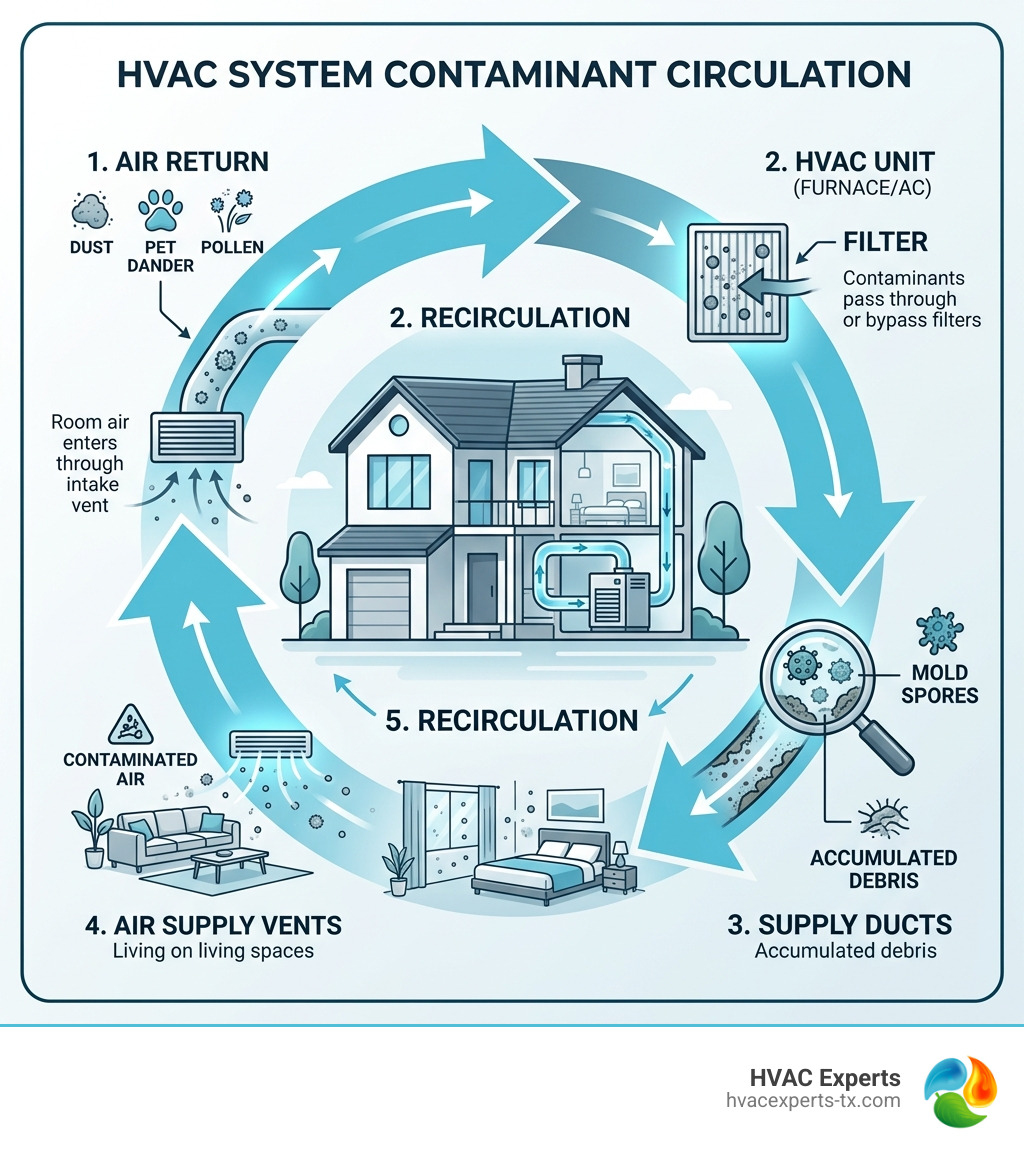
The EPA estimates that indoor air pollutant levels can be two to five times higher than outdoor levels. Your ductwork is a big reason why. Every time your HVAC system runs, it redistributes whatever has built up inside, including dust, pet dander, mold spores, and more, straight into the rooms where you live and breathe.
The good news? Knowing when cleaning is actually needed, and how to get it done right, can save you money and protect your family’s health.
When is Professional HVAC System Duct Cleaning Actually Necessary?
As we move through May 2026, many of our neighbors in Odessa and Midland are gearing up for the brutal summer heat. But before you crank that AC to the max, you might wonder if you’re about to blow a decade’s worth of dust into your living room.
While some companies might tell you that you need a cleaning every time the wind blows, we prefer to stick to the facts. According to the information in: Should You Have the Air Ducts in Your Home Cleaned? | US EPA, there are three specific “triggers” that make professional cleaning a must:
- Visible Mold Growth: If you see “fuzzy” patches or black spots on the hard surfaces of your ducts or on other components of your heating and cooling system, it’s time to act. However, many substances look like mold. A professional should verify it, and more importantly, you must fix the moisture source, or the mold will just come back for a sequel.
- Vermin Infestation: We’ve seen it all in West Texas—from rodents to insects making themselves at home in the ductwork. If critters have moved in, they leave behind more than just memories; their droppings and nesting materials are major health hazards.
- Excessive Debris and Clogs: If your ducts are so clogged with dust and debris that particles are actually flying out of your registers, you’ve reached the “excessive” stage.
The West Texas Factor: Sand and Dust Storms
In places like Big Spring, Pecos, and Monahans, we deal with a unique environmental challenge: the haboob. Those massive dust storms don’t just stay outside. Fine silt and sand find their way into every nook and cranny. Over time, this “Permian Basin seasoning” settles in your return ducts. If you notice your home feels dusty just hours after cleaning, your HVAC system might be acting as a dust-delivery service.
Post-Remodel Cleanup
Did you recently update your kitchen in Garden City or add a room in Greenwood? Construction is a “duct-killer.” Drywall dust, sawdust, and carpet fibers are incredibly fine and heavy. Even if you were careful, your HVAC system likely sucked up these particulates during the process. We often find that new construction homes actually need a cleaning sooner than older homes because builders often run the furnace or AC while sanding drywall.
If you are noticing poor airflow or strange smells, you might also want to check out our guide on Signs You Need Air Duct Replacement to see if your issues go deeper than just some surface dust.
The Real Benefits of Cleaning Your Air Ducts
Is it worth the investment? For many of our clients in the Odessa-Midland area, the answer is a resounding yes, especially when looking at long-term health and system performance. You can read more about the Benefits of Professional Duct Cleaning in Odessa on our blog, but let’s break down the big wins here.
Allergen and Odor Reduction
If you share your home with four-legged friends, your ducts are likely a repository for pet dander and fur. For those with asthma or severe allergies, these trapped allergens can make life miserable. Cleaning the ducts removes the “fuel” for those sneezing fits.
Additionally, ducts can trap odors. Whether it’s from cooking, tobacco smoke, or that “musty” smell that appears when the AC kicks on, a thorough cleaning can help reset your home’s scent to “neutral.”
System Longevity and Cleanliness
Your HVAC system is like the lungs of your home. When the “lungs” are full of gunk, the heart (your blower motor) has to work twice as hard. By removing the buildup, you reduce the strain on your equipment. This doesn’t just lower your stress; it keeps your home cleaner. When the ducts are clean, that fine layer of grey dust stops appearing on your glass coffee table five minutes after you’ve polished it.
Improving HVAC System Duct Cleaning Efficiency
When we talk about HVAC system duct cleaning efficiency, we are not just talking about the cleaning process itself. We are talking about how your system runs afterward.
- Airflow Optimization: Think of your ducts like arteries. If they are narrowed by “plaque” (dust and debris), the air can’t flow freely. Cleaning restores the original diameter of the duct, allowing for maximum airflow.
- Energy Savings: While cleaning the duct walls alone provides a modest efficiency boost, a truly professional job includes cleaning the evaporator coils and the blower motor. According to industry standards, cleaning these components can significantly improve heat transfer, which means your system runs for shorter cycles to reach the same temperature.
- Lower Utility Bills: In the heat of a West Texas July, every minute your AC doesn’t have to run is money back in your pocket.
The Professional HVAC System Duct Cleaning Process
The gold standard is Source Removal. Here is how we do it:
- Inspection: We use cameras to see exactly where the buildup is.
- Negative Pressure: We hook up a high-powered vacuum (often truck-mounted) to your duct system. This creates a vacuum (negative pressure) of 4,000 to 16,000 Cubic Feet per Minute (CFM). This ensures that when we knock dust loose, it gets sucked into our containment system, not into your bedroom.
- Mechanical Agitation: We use rotary brushes, “skipper balls,” and air whips to physically scrub the inside of the ducts.
- HEPA Filtration: All air exhausted by our vacuums passes through HEPA filters, capturing 99.97% of particles down to 0.3 microns.
- Component Cleaning: We don’t just do the tubes; we clean the drain pans, coils, and the plenum.
Professional vs. DIY: Is it Worth the Investment?
We love a good weekend warrior project as much as the next Texan, but duct cleaning is one area where DIY can actually do more harm than good.
| Feature | DIY Method (Shop-Vac) | Professional Source Removal |
|---|---|---|
| Suction Power | ~150-300 CFM | 4,000-16,000 CFM |
| Reach | 6-10 feet | Entire system (100-300 linear ft) |
| Agitation | Manual brushing (limited) | Pneumatic whips and rotary brushes |
| Containment | Dust often leaks back into the room | Negative pressure keeps home clean |
| Risk | High risk of tearing flexible ducts | Controlled, specialized tools |
The Danger to Flexible Ducts: Most modern homes in Odessa and Midland use flexible ductwork (the “slinky” looking stuff). If you shove a stiff shop-vac hose or a generic brush in there, you can easily tear the inner lining. Now, instead of a dusty duct, you have a leaking duct that’s blowing cold air into your attic. That’s an expensive mistake!
Costs, Scams, and Choosing a Reliable Provider
Let’s talk turkey. How much should this cost? A legitimate, thorough HVAC system duct cleaning for a standard single-family home can vary quite a bit based on system size, duct layout, contamination level, and the equipment needed.
The price varies based on:
- The number of systems (units).
- The size of the home (number of vents).
- The level of contamination (mold remediation costs more than simple dust removal).
- Accessibility (crawl spaces vs. attics).
Beware the “$99 Special”
You’ve seen the flyers or the Facebook posts: “$99 Whole House Special!”
Run.
This is almost always a “bait and switch” scam. Once the “technician” (who often has no formal training) gets into your home, they will suddenly “discover” a massive mold infestation that will cost $2,000 to fix. Or, they will simply use a handheld vacuum to clean the registers you can see, leaving the actual ductwork untouched.
How to Choose the Right Pro
Since 1996, Texas has had specific licensing requirements for HVAC contractors. When you’re looking for a provider in the Permian Basin, look for these credentials:
- NADCA Certification: The National Air Duct Cleaners Association is the industry watchdog.
- ASCS Credentials: An Air Systems Cleaning Specialist has passed rigorous exams on how to clean systems without damaging them.
- Written Estimates: Never agree to a job without a clear, written scope of work.
- Camera Inspections: A reputable pro will show you the “before” and “after” shots.
Frequently Asked Questions about HVAC System Duct Cleaning
How often should air ducts be cleaned according to experts?
NADCA generally recommends a cleaning every 3 to 5 years. However, in our neck of the woods (West Texas), you might want to lean toward that 3-year mark if:
- You have indoor pets that shed.
- You or someone in your home smokes.
- You’ve recently completed a home renovation.
- You live in a high-dust area near oil field activity or unpaved roads.
Does the EPA recommend routine duct cleaning for health benefits?
The EPA takes a cautious stance. They do not recommend that air ducts be cleaned routinely, but only as needed. They emphasize that your primary focus should be on preventive maintenance: changing your filters regularly, ensuring a good seal so air doesn’t bypass the filter, and controlling moisture to prevent mold.
How can I verify if a duct cleaning job was done thoroughly?
Don’t just take their word for it. Here is how you check their work:
- The Mirror Test: Use a small mirror and a flashlight to look behind the registers. The surfaces should be visibly clean.
- Component Check: Ask to see the blower motor and the evaporator coils. If the “lungs” are clean but the “heart” is still covered in dust, the job isn’t finished.
- The “No Dust” Rule: There should be no visible debris blowing out of the vents when the system is turned back on.
Conclusion
At the end of the day, your HVAC system duct cleaning is about more than just dust—it’s about the health of your home and the efficiency of your most expensive appliance. While it’s not a service you need every month, doing it right every few years can make a world of difference in the air you breathe.
To keep your system in top shape between cleanings, remember these tips:
- Use High-Quality Filters: Look for a MERV rating that balances filtration with airflow (usually MERV 8 to 11 for residential).
- Control Humidity: Keep your home between 30% and 50% humidity to discourage mold.
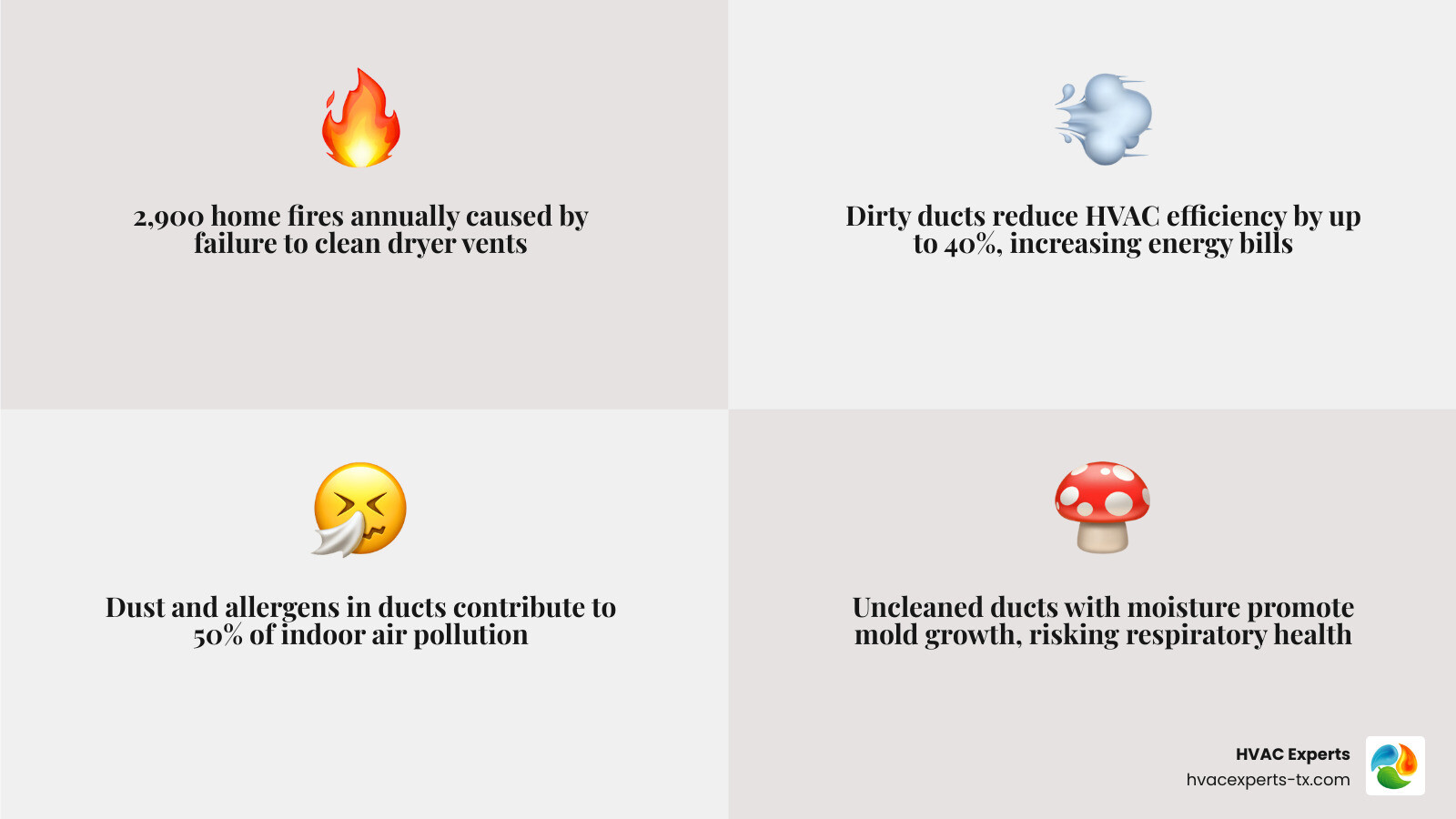
- Don’t Forget the Dryer: Failing to clean dryer vents is a leading cause of house fires. We recommend a professional dryer vent cleaning once a year.
If you’re in Odessa, Midland, or anywhere across the Permian Basin and you think your system is due for a checkup, we’re here to help. At HVAC Experts, we offer 24/7 emergency service and our Diamond Club membership for those who want priority scheduling and peace of mind.
Ready to breathe easier? Contact our expert HVAC technicians and schedule duct cleaning services today. Let us help you clear the air!
4.9 · 1,899 Google reviews
Need help at home?
Call 432-272-5636 for a free estimate.