
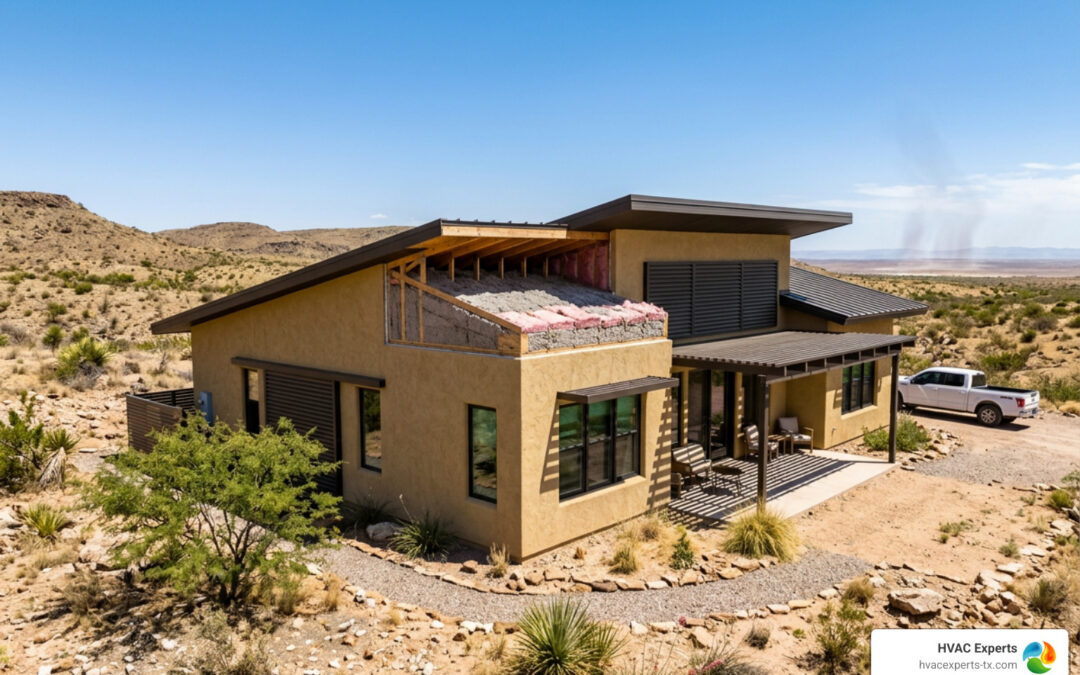
Why the Best Insulation in the Permian Basin Is a Year-Round Necessity
If you’re looking for the best insulation Permian Basin homes and businesses can get, here’s a fast answer:
| Use Case | Best Insulation Type |
|---|---|
| Attic (existing home) | Blown-in fiberglass or cellulose |
| Attic (roofline/new build) | Closed-cell spray foam |
| Crawl space walls | Rigid foam board + vapor barrier |
| Exterior walls | Closed-cell spray foam or fiberglass batts |
| Metal buildings | Reflective foil + spray foam |
| Pipe protection | Closed-cell foam sleeves + heat tape |
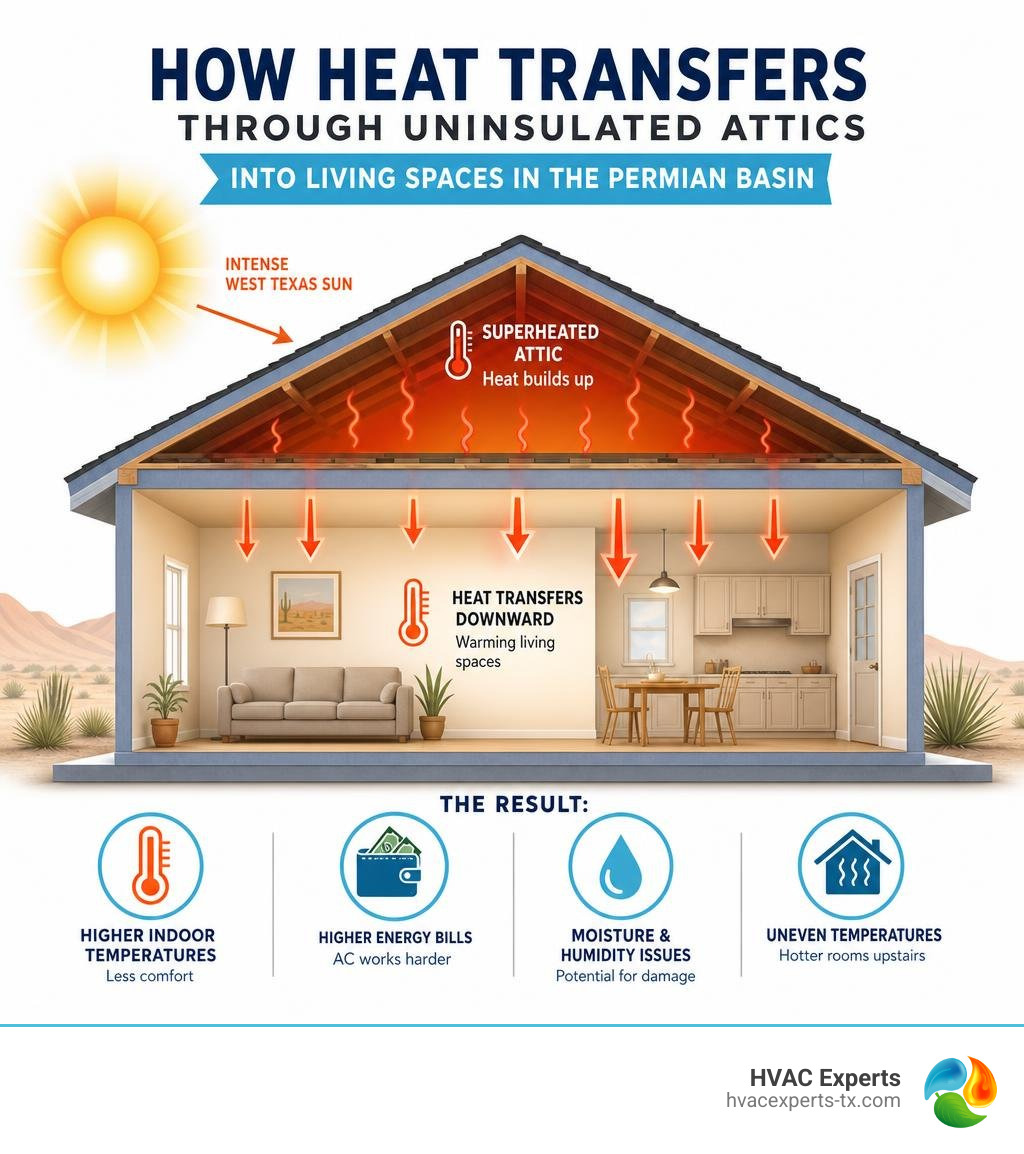
Living in Midland or Odessa means dealing with some of the harshest conditions a home can face. Summer attic temperatures regularly hit 150°F. Winters can drop below freezing overnight, sometimes with almost no warning. And the wind carries fine Permian Basin dust through every gap it can find.
Most homes in the area were built during the 1970s and 1980s oil booms. That means a large share of the local housing stock is now 40 to 50 years old, insulated to standards that were never designed for what West Texas summers demand today.
The February 2021 winter storm made the problem impossible to ignore. Pipes burst. Slabs cracked. Energy bills spiked. Many homeowners discovered for the first time just how exposed their homes really were.
Good insulation isn’t just about comfort. It’s about protecting your home, your plumbing, and your wallet.
Climate Challenges, R-Values, and Code Requirements in Climate Zone 3B
To choose the best insulation Permian Basin homes need, we have to look closely at our geography. The Permian Basin falls into Climate Zone 3B, which is defined by the International Energy Conservation Code (IECC) as dry and hot. However, “dry and hot” only tells half the story.
Our region experiences massive temperature swings, high winds, and a long dry season with an average of only 14 inches of rain per year. This lack of moisture directly impacts the ground beneath our feet.
Caliche Soil and Foundation Movement
Most homes in Midland, Odessa, and surrounding areas like Greenwood and Gardendale sit on slab-on-grade foundations built over caliche or sandy soil. When we go months without rain, this soil dries out completely, shrinks, and shifts. This continuous movement creates tiny gaps and cracks around your foundation, crawl space, and plumbing entry points.
If these gaps are left unsealed, they become open highways for hot summer air, freezing winter drafts, and pests. The team at HVAC Experts helps homeowners combine proper insulation with professional air sealing to stabilize the indoor environment and keep foundation-level temperature swings from stressing the home’s structure.
For homes with aging attic insulation, our insulation installation services can help identify the right upgrade for the structure, whether that means adding blown-in material, improving air sealing, or addressing problem areas around walls, crawl spaces, and plumbing penetrations.
Climate Zone 3B R-Value Targets
R-value measures an insulation material’s resistance to conductive heat flow. The higher the R-value, the better the material is at keeping heat out in July and keeping it in during January. To meet modern building codes, including IRC R316 and IECC updates, in cities like Odessa and Midland, properties must target specific R-values:
| Location in Home | Recommended R-Value | Common Material Solutions |
|---|---|---|
| Attic | R-38 to R-60 | Blown-in fiberglass, cellulose, or spray foam |
| Exterior Walls | R-13 to R-20 | Fiberglass batts or closed-cell spray foam |
| Crawl Space Walls | R-10 to R-15 | Rigid foam board or spray foam |
| Floor Joists | R-19 | Blown-in or fiberglass rolls |
For many local homes built decades ago, the existing insulation has settled down to an R-value of less than R-15. Upgrading to R-38 or higher in your attic is the single most effective way to lower your cooling bills. Homeowners comparing attic materials can also learn why blown-in insulation helps fill gaps and improve coverage in older homes without opening up finished walls.
Beyond R-value, building codes require proper safety measures. For example, foam plastics installed in crawl spaces or attics must be protected by an approved ignition barrier unless they contain specialized fire-retardant additives. Additionally, in termite-prone West Texas, a visible termite inspection gap must be maintained at the top of crawl space walls to ensure pest control professionals can inspect the wood framing.
Comparing the Best Insulation Permian Basin Options
No single insulation material is perfect for every application. Let’s look at the pros, cons, and typical uses of the most popular options available in our region.
Spray Foam vs. Blown-In Insulation
The two heavyweights of residential insulation are spray foam and blown-in insulation, including fiberglass or cellulose.
- Spray Foam Insulation: Available in open-cell and closed-cell varieties. Closed-cell spray foam is highly dense, water-resistant, and expands up to 60 times its liquid volume to seal every tiny crack. It acts as both insulation and an air barrier. The main drawback is the higher upfront cost and the need for professional installation.
- Blown-In Insulation: Typically blown onto attic floors. It is highly cost-effective, quick to install, and perfect for filling deep attic spaces without removing walls.
For commercial and agricultural properties, spray foam is often the premier choice. It can even be used to insulate roof structures in metal shops, warehouses, and oilfield support buildings where heat gain and condensation can both become major problems.
Rigid Foam Board and Reflective Foil
For crawl spaces, metal buildings, and specialized wall applications, we look to rigid foam board and reflective foil.
- Rigid Foam Board: Made of materials like expanded polystyrene (EPS) or polyisocyanurate (polyiso). It provides continuous thermal coverage, meaning it blocks heat from traveling through the wooden or metal studs of your home. It’s highly moisture-resistant, making it ideal for crawl space encapsulation.
- Reflective Foil (Radiant Barrier): Rather than slowing down conductive heat, reflective foil reflects radiant heat away. In a metal building or a home with a dark roof and no shade trees, installing a radiant barrier can stop up to 97% of radiant heat from entering the attic space.
The right wall system depends on how the building is framed, where air leaks are forming, and whether the goal is comfort, dust control, or energy savings. Our overview of wall insulation options for Texas homes explains how these materials work together to protect the exterior envelope.
Retrofitting, Removal, and Winter-Proofing Your Property
If your home was built during the 1970s or 1980s oil booms, its insulation is likely degraded. Over the last 40 to 50 years, traditional fiberglass batts settle, accumulate dust, and lose their loft. When insulation loses its thickness, it loses its R-value.
When to Remove Old Insulation
You don’t always have to remove old insulation to upgrade. If the old material is dry and free of pests, we can often blow new fiberglass or cellulose directly over it. However, you should opt for complete insulation removal and retrofit upgrades if you experience:
- Pest Infestations: Rodents and insects love nesting in old fiberglass.
- Water Damage: Roof leaks or plumbing leaks ruin the thermal properties of cellulose and fiberglass, leading to mold.
- Severe Air Leaks: If your home is incredibly dusty, we need to remove the old insulation to seal the plasterboard seams and wire penetrations beneath it.
Before starting a messy attic or wall retrofit, it helps to understand what happens during professional insulation removal, especially if the existing material may contain pests, moisture, or heavy dust buildup.
Winter-Proofing Plumbing and Preventing Slab Leaks
The record-breaking freeze of February 2021 taught us that West Texas winters can be brutal. Because many homes in Monahans, Pecos, Andrews, and Big Spring are built on slab foundations, plumbing lines run directly through uninsulated concrete or cold crawl spaces.
When temperatures plunge, water inside these pipes freezes and expands. This puts immense pressure on pipe joints, leading to burst pipes or hidden slab leaks.
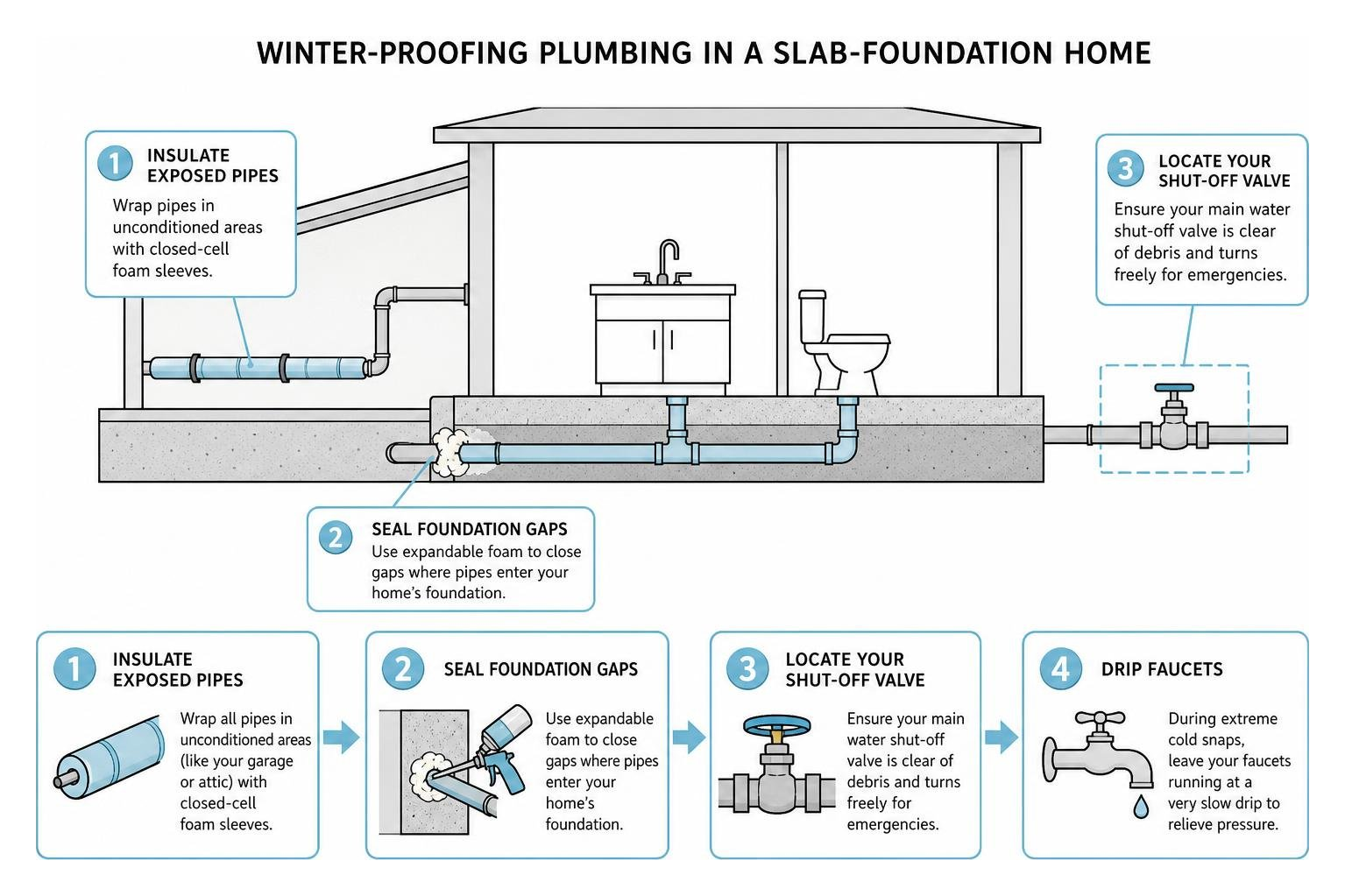
To protect your plumbing, follow this simple checklist:
- Insulate Exposed Pipes: Wrap all pipes in unconditioned areas, like your garage or attic, with closed-cell foam sleeves.
- Seal Foundation Gaps: Use expandable foam to close gaps where pipes enter your home’s foundation.
- Locate Your Shut-Off Valve: Ensure your main water shut-off valve is clear of debris and turns freely so you can stop water quickly in an emergency.
- Drip Faucets: During extreme cold snaps, leave your faucets running at a very slow drip to relieve water pressure.
If insulation problems are affecting more than one part of your comfort system, HVAC Experts can also evaluate related heating and AC service needs during the same visit so your home’s envelope and equipment work together more efficiently.
Frequently Asked Questions about Permian Basin Insulation
How do I choose the best insulation Permian Basin has to offer for metal buildings?
Metal buildings are highly prone to condensation because metal transfers heat rapidly. To prevent “sweating” and regulate interior temperatures, we recommend a combination of reflective foil insulation to bounce radiant heat away and closed-cell spray foam applied directly to the metal panels. This dual approach stops condensation in its tracks and keeps the building comfortable.
How does the best insulation Permian Basin homeowners use reduce indoor dust?
Because of our dry climate and frequent windstorms, dust infiltration is a major headache. Traditional insulation allows air and dust to pass right through. By upgrading to spray foam or performing professional air sealing before blowing in new insulation, we seal the tiny cracks around light fixtures, pipes, and wall plates, keeping the dust outside where it belongs.
Do I need a permit for insulation installation in Midland or Odessa?
Yes, in most cases, local building departments require permits for major insulation retrofits or new construction. Obtaining a permit ensures the work is inspected and complies with local fire, safety, and energy codes. Our team handles the permitting process and provides full documentation for your records, which is incredibly valuable for home resale and insurance purposes.
Conclusion
Upgrading your insulation is one of the smartest investments you can make for your home or business. In the extreme climate of the Permian Basin, proper insulation keeps your space cool in July, warm in January, and free of wind-blown dust year-round.
At HVAC Experts, we are proud to serve communities across West Texas, from Midland and Odessa to Andrews, Crane, Pecos, and Ft Stockton. We provide professional insulation installation and removal tailored to the unique climate and soil challenges of our region. With our 24/7 emergency service and Diamond Club membership for priority scheduling and discounts, we are always here when you need us.
Ready to start saving on your energy bills? Contact our professional insulation technicians to schedule your free, professional estimate today.