
May 26, 2026 · Energy Efficiency
Wall Insulation 101: Everything You Need to Know
Discover how blown in insulation walls boost energy efficiency, cut costs, and improve comfort—learn the full drill-and-fill process today.

Why Blown In Insulation Walls Matter for Your Home’s Comfort and Energy Bills
Blown in insulation walls are one of the most effective ways to stop energy loss in existing homes — without tearing out drywall or doing a full renovation.
Quick answer: Blown-in wall insulation fills empty wall cavities with loose-fill material, usually cellulose or fiberglass, using a hose and blower machine. It can reduce heating and cooling costs by up to 20%, improve comfort, and cut sound transmission significantly, all with minimal disruption to your home.
| What You Want to Know | Quick Answer |
|---|---|
| What is it? | Loose-fill insulation blown into wall cavities through small drilled holes |
| Best materials | Cellulose (R-3.8/inch) or fiberglass (R-2.2–2.7/inch) |
| Main benefit | Up to 20% reduction in heating and cooling costs |
| Typical payback period | 3 to 5 years |
| DIY or professional? | Professional recommended for walls |
| Works on older homes? | Yes, with some safety checks first |
If your home was built before the 1980s, there’s a good chance your exterior walls have nothing inside them, just air sitting between studs. That air does very little to keep heat out during a West Texas summer or hold warmth in on a cold winter night.
One homeowner described it this way: walls that “feel cold all the time,” even with the heat running. That’s exactly what empty wall cavities feel like from the inside.
Blown-in insulation solves that problem. It fills every gap and void in the wall cavity, creating a continuous thermal barrier that batts and rigid boards simply can’t match in an existing wall.
This guide covers everything you need to know: materials, installation, costs, risks, and what to expect after the job is done.
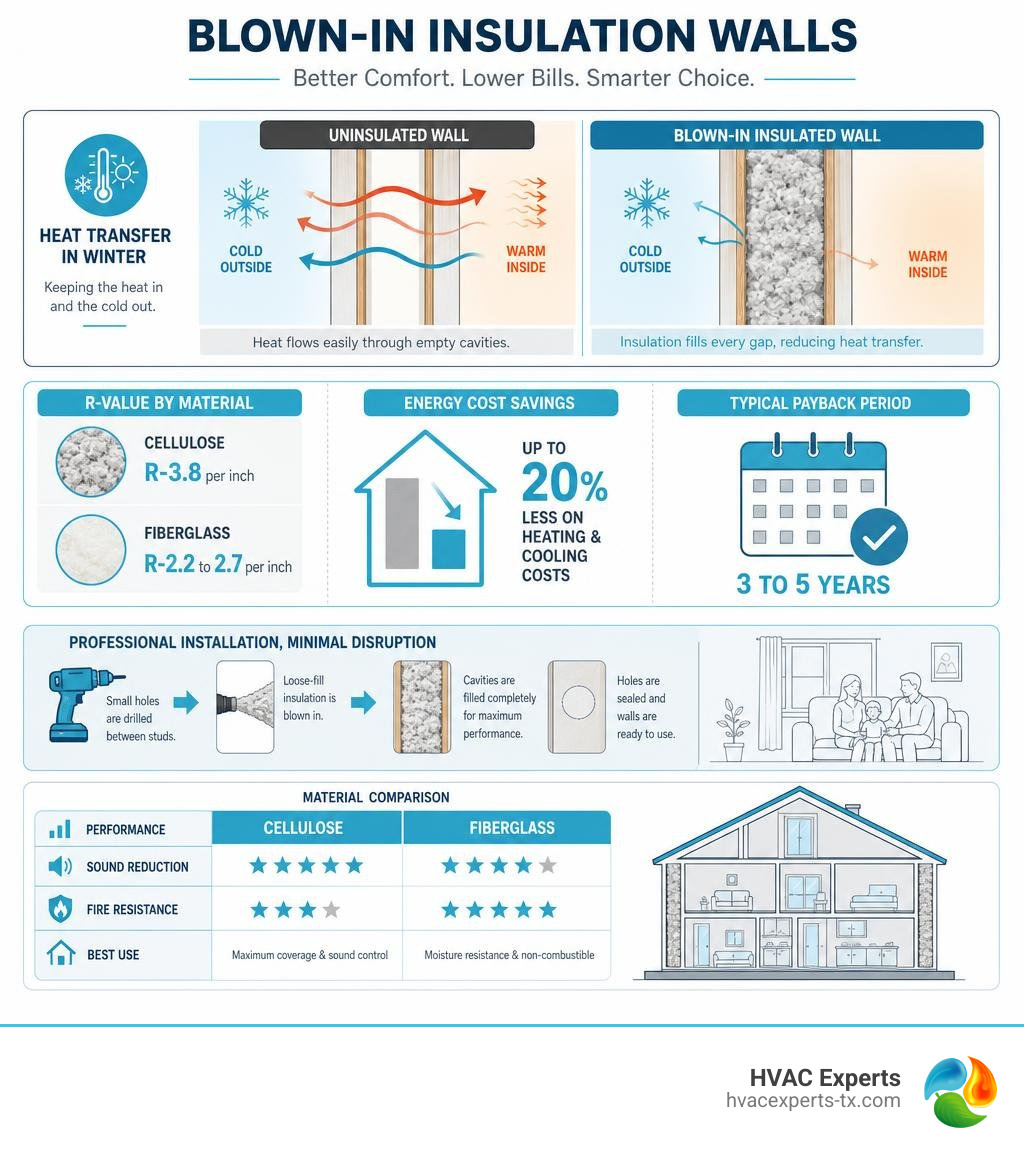
Understanding Blown In Insulation Walls and How They Work
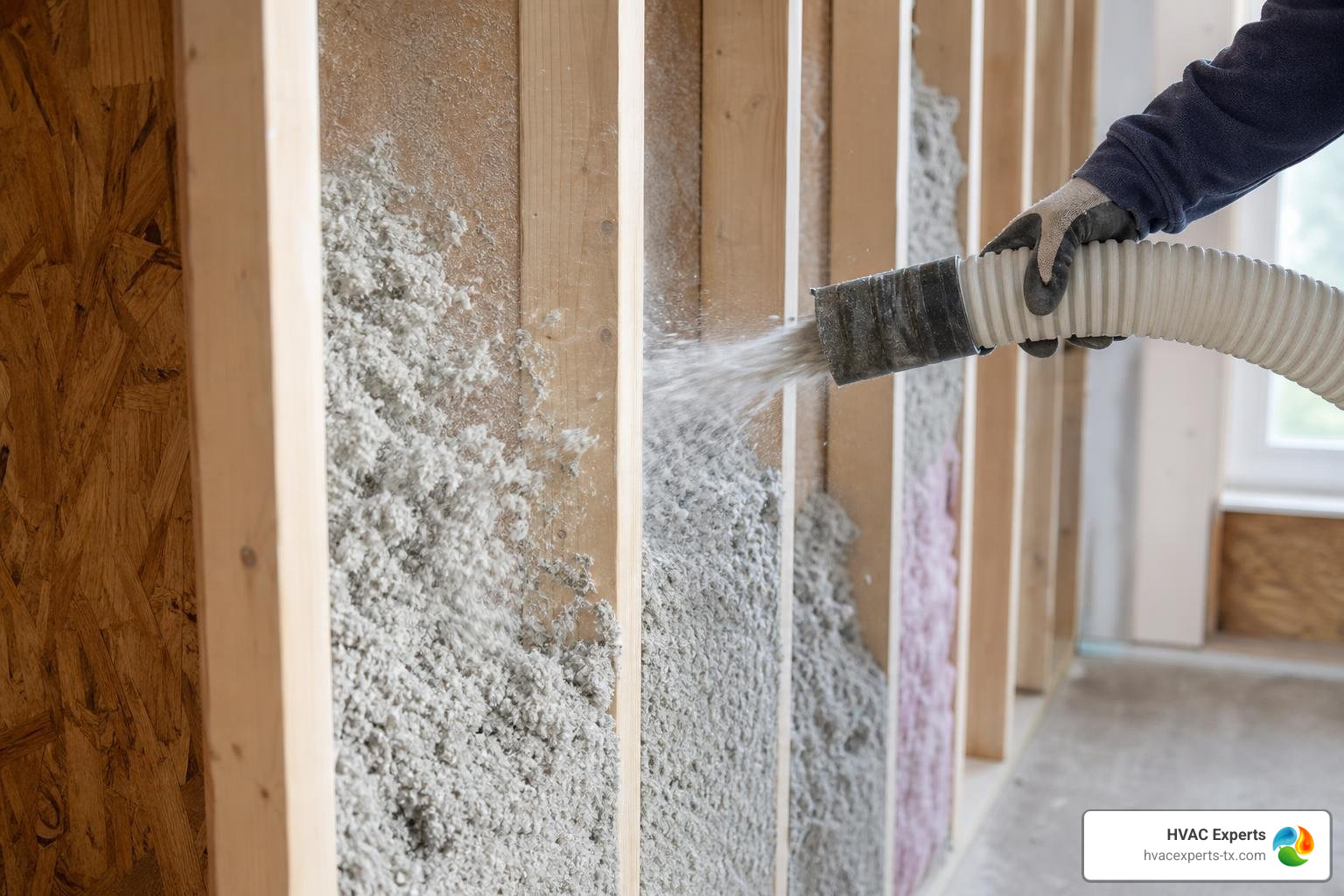
At its core, the concept of blown in insulation walls is incredibly straightforward. Instead of tearing down your drywall to lay in traditional fiberglass batts, we use specialized pneumatic machinery to blow loose-fill insulation directly into the closed cavities of your existing exterior walls.
For existing homes in Odessa, Midland, and across the Permian Basin, this is an absolute game-changer. Older homes in our region were often built with empty wall cavities. These spaces act as highways for heat transfer. In the dead of summer, the scorching West Texas sun bakes your exterior siding, and that heat easily migrates directly through your uninsulated walls into your living spaces. In the winter, the reverse happens: your expensive heated air escapes right through those same empty pockets.
By filling these empty spaces with dense-pack loose-fill material, we create a high-performance thermal barrier. The insulation traps tiny pockets of air, which slows the rate of heat transfer. Understanding the advantages of blown in insulation is the first step toward reclaiming your home’s comfort and reducing strain on your air conditioning system.
How Blown In Insulation Walls Improve Energy Efficiency
To understand how this translates to lower utility bills, we have to look at R-value. R-value measures a material’s thermal resistance, or its ability to resist heat flow. The higher the R-value, the better the insulation performs.
When we install dense-packed insulation in your walls, we aren’t just loosely tossing material in. We pack it to a specific density (usually 3.5 lbs/ft³ or greater for cellulose). This dense-packing technique does two things:
- It achieves a higher R-value per inch.
- It physically blocks air infiltration, acting as a secondary air barrier.
According to technical resources like the Blown Insulation for Cavities of Existing Exterior Walls | Building America Solution Center, proper dense-packing fills all the awkward gaps around electrical boxes, plumbing lines, and structural framing that traditional batts often miss.
The real-world benefits are substantial:
- Energy Savings: Adding blown-in insulation to uninsulated walls can reduce your heating and cooling costs by up to 20%. In our extreme climate, where air conditioners run around the clock for months at a time, those savings add up fast.
- Acoustic Comfort: Beyond keeping you cool, dense-pack blown insulation can reduce sound power transmission through your walls by up to 60%. If you live near a busy road in Big Spring or Stanton, you will notice a quieter, more peaceful indoor environment almost immediately.
Assessing Your Walls for Retrofit Suitability
Before we start drilling holes, we must determine if your walls are good candidates for a retrofit. Not every wall is ready for insulation right out of the gate.
First, we need to know what is currently inside your walls. If your home already has old, deteriorated batt insulation, simply blowing loose-fill material on top of it can cause clogs, leaving massive uninsulated voids. To inspect this, we have a few non-destructive tricks:
- The Outlet Check: After turning off the power at the breaker, we can remove the plastic cover plates from your electrical outlets on exterior walls. By peering in with a flashlight or using a plastic probe, we can see if there is existing insulation.
- Infrared Imaging: Using thermal imaging cameras on a hot day allows us to see exactly where heat is entering your home. Uninsulated stud cavities will show up as bright red or yellow, while insulated areas will remain cool.
- Small Inspection Holes: In some cases, we may make a small, easily patchable cut-out in an inconspicuous spot of your drywall or plaster walls to verify the cavity’s contents.
If your walls currently have old, wet, or ruined insulation, you might need to address that first. It is always wise to ask, What should I know before hiring an insulation removal service? before moving forward with a clean slate.
Cost, Payback Period, and ROI
Let’s talk numbers. The cost of retrofitting your walls with blown-in insulation depends on the size of your home, the material chosen, wall condition, and whether installers access the cavities from the interior or exterior. In most cases, dense-pack cellulose is priced based on project scope, labor, and the amount of wall space being insulated.
Because of the immediate drop in your monthly energy usage, this project offers an exceptional return on investment (ROI). Most homeowners experience a complete payback period within 3 to 5 years. After that, the monthly savings on your utility bills are pure profit.
To put this in perspective, let’s compare a wall retrofit to an attic insulation project:
| Feature / Cost Factor | Blown-In Wall Insulation (Drill-and-Fill) | Attic Insulation Retrofit |
|---|---|---|
| Average Cost Range | $1.60 – $2.30 per sq. ft. of wall | $1.50 – $2.50 per sq. ft. of attic floor |
| Installation Time | 1 to 2 days (requires drilling & patching) | Less than 4 hours for a 1,000 sq. ft. attic |
| Primary Benefit | Eliminates hot/cold walls, drafts, and street noise | Stops rising heat in winter and radiant roof heat in summer |
| Typical Payback | 3 to 5 years | 2 to 4 years |
| DIY Friendliness | Low (high risk of drywall bowing or hitting wires) | Moderate (open joists are easier to access) |
While attic insulation is often the first recommendation for energy efficiency, insulating empty exterior walls provides a massive boost in overall comfort because you are surrounded by these vertical surfaces every day.
Materials and Performance: Cellulose vs. Fiberglass
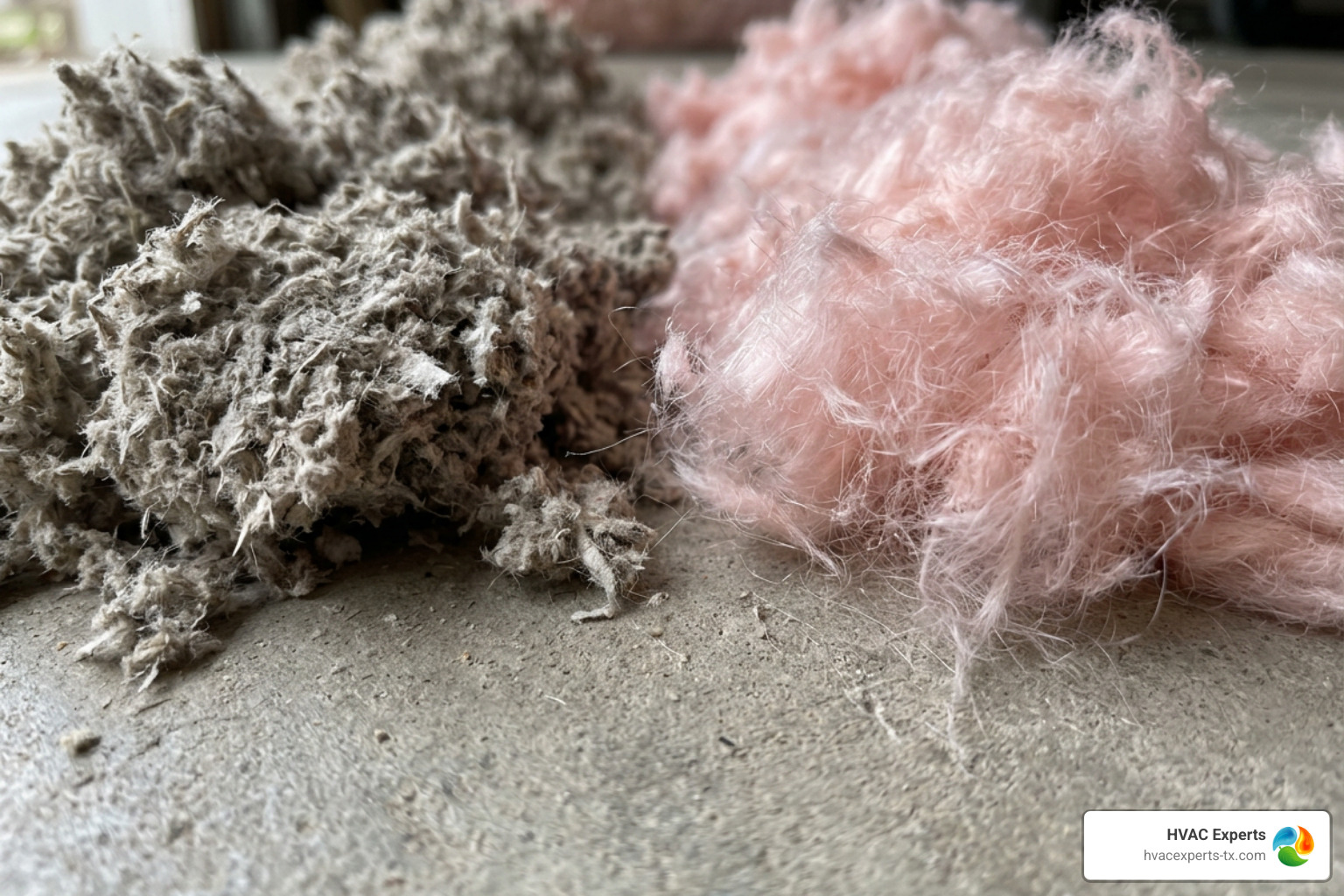
When retrofitting your home’s walls, you will primarily choose between two popular loose-fill materials: cellulose and fiberglass. Both materials are highly effective, but they have distinct physical properties, R-values, and installation behaviors.
Cellulose Insulation Pros and Cons
Cellulose is the heavyweight champion of retrofits. It is made from roughly 80% recycled paper and plant fibers (primarily post-consumer newsprint). To make it safe for your home, the wood fibers are treated with natural borates, providing excellent fire resistance, insect deterrence, and mold resistance.
Pros:
- Higher R-Value: At 3.8 per inch, a standard 2×4 wall cavity (which is 3.5 inches deep) filled with dense-pack cellulose will achieve roughly an R-13 to R-14 rating.
- Superior Air Sealing: Because of its dense, wood-fiber structure, dense-packed cellulose physically blocks air currents much better than standard fiberglass.
- Eco-Friendly: It repurposes tons of recycled paper that would otherwise end up in Texas landfills.
- Sound Dampening: Its high density makes it fantastic at absorbing sound waves.
Cons:
- Weight: It is heavier than fiberglass, meaning installers must be careful not to over-pack and bow older drywall or plaster.
- Dust and Odor: During installation, it can generate a fair amount of harmless paper dust, and a slight “newspaper” smell can linger for about two weeks before completely dissipating.
Fiberglass Blown In Insulation Walls Performance
Loose-fill fiberglass consists of spun glass fibers. Unlike the itchy pink batts of the past, modern blowing wool is designed specifically for pneumatic machines. Virgin fiberglass blowing wool is specifically engineered for weatherizing existing homes.
Pros:
- Naturally Noncombustible: Because it is made of glass, fiberglass is completely fireproof without requiring chemical retardant treatments.
- Moisture Resistance: Fiberglass does not absorb water weight, meaning it dries out quickly if exposed to temporary moisture and will not sustain mold growth.
- Lightweight: It puts very little physical pressure on your interior wall boards.
- Coverage Efficiency: You need fewer bags of fiberglass compared to cellulose to cover the same volume of wall space.
Cons:
- Lower R-Value per Inch: Fiberglass typically provides an R-value of 2.2 to 2.7 per inch in loose-fill form. Even when dense-packed, it generally maxes out around R-11 to R-13 in a standard 2×4 cavity.
- Air Permeability: Glass fibers are less dense than cellulose, meaning air can pass through them more easily unless the wall is perfectly air-sealed first.
The Drill-and-Fill Installation Process for Existing Walls
How do we actually get the insulation inside your walls without tearing down your house? We use a smart, minimally invasive technique called the drill-and-fill method.
This process allows us to access your wall cavities either from the outside (by temporarily removing siding or drilling through exterior sheathing) or from the inside (by drilling through your drywall or plaster).
Step-by-Step Drill-and-Fill Method
When you hire a professional crew, the insulation installation follows a highly organized, systematic process to ensure every single wall cavity is packed perfectly. If you are curious about selecting the right team for this job, you can read about What is the Process of Choosing the Right Insulation Companies for Your Home? to ensure you get quality results.
Here is what the step-by-step process looks like:
- Preparation and Layout: We use stud finders to map out the vertical framing members (studs) along your exterior walls. This tells us exactly where each closed cavity begins and ends.
- Drilling the Holes: We drill a small hole (usually 2 to 3 inches in diameter) into the top of each wall cavity. If your home has fire blocking (horizontal wood supports halfway up the wall), we will drill a second set of holes below the blocks to ensure the entire wall is filled.
- Pneumatic Blowing: We insert a flexible hose connected to our heavy-duty blowing machine. The hose is pushed down to the very bottom of the cavity. As the machine pumps the material in, the technician slowly pulls the hose upward, compacting the insulation to the perfect density.
- Verification: We verify that the cavity is completely full. This can be done using a density gauge or by scanning the wall with an infrared camera to check for cold spots or air gaps.
- Patching and Cleanup: Once filled, we seal the holes. If we drilled through interior drywall, we insert a wood or foam plug, apply drywall compound, and sand it smooth so it’s ready for paint. If we went through exterior siding, we restore the siding and ensure the moisture-resistant barrier is fully repaired.
Key Considerations and Risks for Older Homes
If you own a historic home in Big Spring, Midland, or Ft Stockton, retrofitting requires extra care. Older homes have unique structural elements that demand professional attention.
- Knob-and-Tube Wiring: This is the most critical safety hazard. Homes built before the 1940s often used knob-and-tube electrical wiring. According to the National Electrical Code (NEC), this type of wiring is designed to dissipate heat into the open air. Surrounding knob-and-tube wiring with any type of insulation is a severe fire hazard. All active knob-and-tube wiring must be replaced by a licensed electrician before we can blow insulation into the walls.
- Lead-Based Paint: If your home was built before 1978, drilling through exterior siding or interior plaster can disturb lead-based paint. Proper lead-safe containment protocols must be followed during the drilling phase to protect your family and our crew.
- Plaster and Lath Walls: Older plaster walls are beautiful, but they are more fragile than modern drywall. Over-packing plaster walls can break the plaster “keys” (the plaster that squeezes between the wood lath to hold it in place), leading to cracked or sagging walls. Experienced installers know exactly how to manage the air pressure on the blowing machine to prevent this.
Post-Installation Steps and Moisture Management
Once the insulation is packed inside your walls, moisture control becomes highly important. In an uninsulated home, drafty walls allow moisture to escape easily. Once we seal those walls and pack them with insulation, any moisture that gets trapped inside can lead to mold or wood rot.
To prevent this, we focus on the following:
- Maintaining the Drainage Plane: If we install insulation from the exterior, we make sure your home’s house wrap or building paper is carefully sealed around our drill holes. This helps keep rain from getting behind your siding and wetting the insulation.
- Air Sealing: Sealing drafts around windows, doors, and baseboards helps stop warm, humid indoor air from moving into cold wall cavities, where it can condense into liquid water.
- Proper Indoor Ventilation: Once your home is more tightly sealed, indoor humidity can rise. That makes working bathroom and kitchen exhaust fans important. It can also be a good time to schedule a thorough duct cleaning to support indoor air quality and help your HVAC system move air more easily.
Frequently Asked Questions
Is having insulation blown into the walls of an old house worth it?
Yes, absolutely! While attic insulation is the easiest first step, adding blown in insulation walls to an older home completely transforms its living environment. It eliminates the “cold wall” effect in the winter and prevents your rooms from turning into ovens in the summer. Homeowners routinely report that their air conditioners run significantly less, and rooms that were previously unusable due to extreme temperatures become comfortable year-round.
What are the risks of adding insulation to older walls?
The primary risks include:
- Moisture Accumulation: If your home has major exterior water leaks, the insulation will absorb that water, leading to mold and wood rot. All exterior leaks must be repaired before insulating.
- Electrical Hazards: Packing insulation around active knob-and-tube wiring can cause a fire.
- Wall Damage: Using excessive pressure during the blow-in process can bow drywall or crack historic plaster. Hiring experienced professionals prevents this.
Are there rebates or incentives available for blown-in insulation?
Yes! Under the Energy Efficient Home Improvement Credit (Section 25C), homeowners can claim a federal tax credit of up to 30% of the cost of insulation materials, up to a maximum of $1,200 per year. Additionally, local utility providers in West Texas occasionally offer rebates for home weatherization and insulation upgrades. We highly recommend getting a professional home energy audit to identify all available savings.
Conclusion
Upgrading your home with blown in insulation walls is one of the smartest investments you can make for long-term comfort, quieter rooms, and lower energy bills. By filling those empty wall cavities, you stop heat transfer right at the source, giving your air conditioner a much-needed break during our brutal West Texas summers.
At HVAC Experts, we specialize in comprehensive home comfort solutions. From optimizing your heating and air conditioning systems to performing high-quality insulation retrofits, we serve homeowners throughout Odessa, Midland, Big Spring, Andrews, Pecos, and the surrounding Permian Basin. We offer 24/7 emergency service and our exclusive Diamond Club membership for priority scheduling and discounts.
Ready to stop wasting money on escaping air? Contact our insulation specialists and schedule installation with HVAC Experts today, and let’s make your home comfortable again!
4.9 · 1,899 Google reviews
Need help at home?
Call 432-272-5636 for a free estimate.