
June 19, 2026 · HVAC Expertise 2025
Drilling Rig HVAC Ducts: Tough Cleaning for Tough Jobs
Design drilling rig HVAC ducts for hazardous zones with blast dampers, positive pressure, and corrosion-resistant materials to prevent gas ingress and ensure safety.
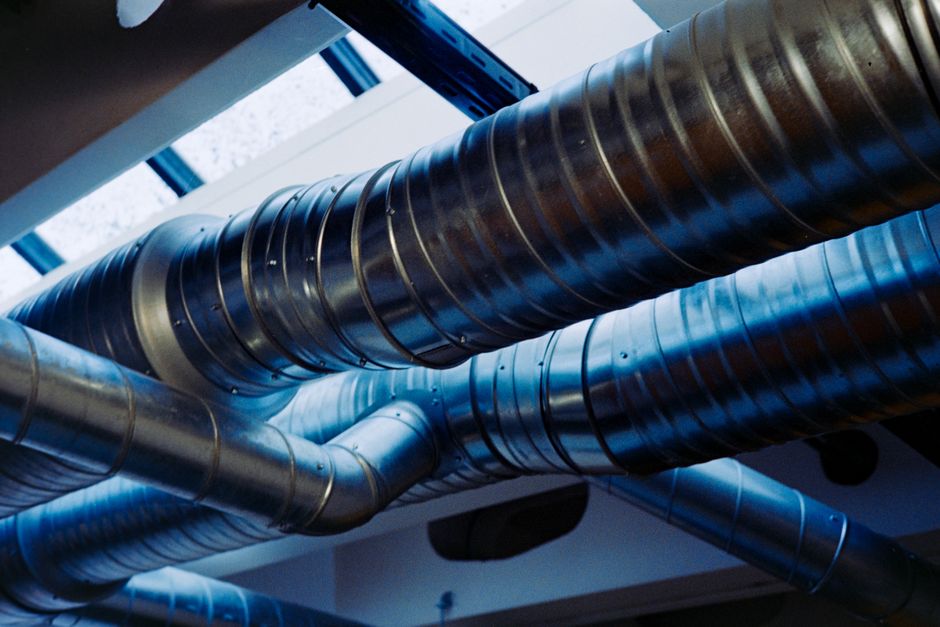
Why Drilling Rig HVAC Ducts Are a Life-Safety System, Not Just Comfort Equipment
Drilling rig HVAC ducts are one of the most safety-critical systems on any offshore or onshore rig, and getting them wrong can be fatal.
Here’s what you need to know fast:
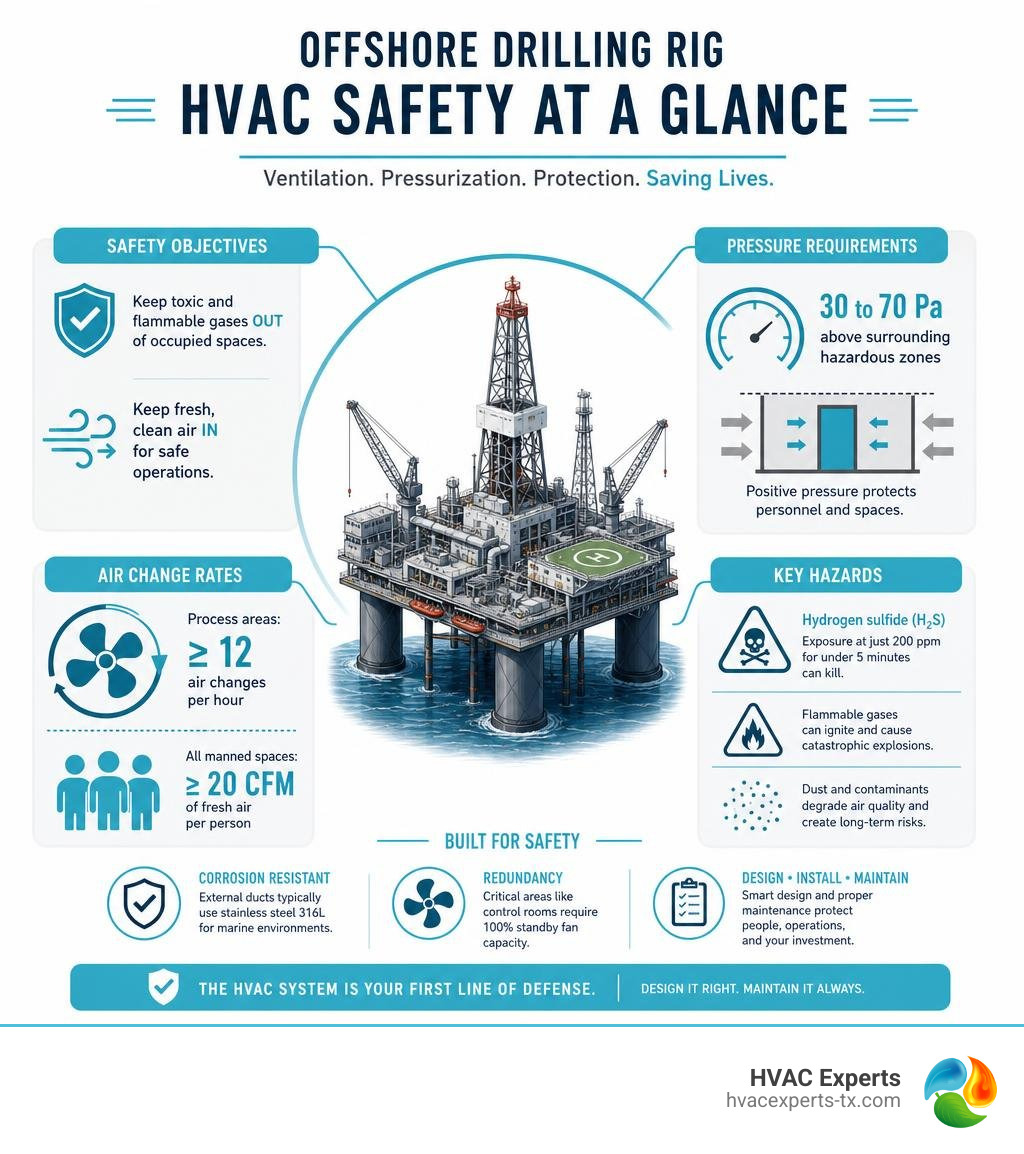
- Primary job: Keep toxic and flammable gases out of occupied spaces, and keep fresh air in
- Key hazard: Hydrogen sulfide (H2S) — exposure at just 200 ppm for under 5 minutes can kill
- Pressure rule: Non-hazardous areas must stay at 30 to 70 Pa above surrounding hazardous zones
- Air changes required: Process areas need at least 12 air changes per hour
- Fresh air minimum: 20 CFM per person in all manned spaces
- Material standard: External ducts typically use stainless steel 316L to resist marine corrosion
- Redundancy: Critical areas like control rooms require 100% standby fan capacity
On a drilling rig, the HVAC duct system does far more than control temperature. It is the barrier between your crew and a potentially deadly atmosphere.
The offshore industry learned this lesson the hard way. The 1988 Piper Alpha disaster, where a gas leak led to an explosion that killed 167 people, permanently changed how engineers think about ventilation, pressurization, and gas ingress on offshore platforms.
Offshore HVAC installation also costs 4 to 5 times more than equivalent onshore work. That makes smart design and proper maintenance not just a safety issue, but a major financial one.
Engineering Drilling Rig HVAC Ducts for Hazardous Area Classifications
When we design and install drilling rig HVAC ducts, we aren’t just dealing with standard sheet metal. Rigs are divided into strict zones based on the likelihood of flammable gases or vapors being present. Understanding these classifications is the first step in keeping your crew safe.
Area classifications typically follow international standards (such as ATEX or IEC) and divide the rig into:
- Zone 0: Areas where an explosive gas atmosphere is present continuously or for long periods.
- Zone 1: Areas where an explosive atmosphere is likely to occur in normal operation.
- Zone 2: Areas where an explosive atmosphere is not likely to occur in normal operation, and if it does, it will only exist for a short time.
- Non-Hazardous Areas: Safe zones, such as living quarters and control rooms, where gas should never be present.
Every component of our HVAC duct system, from the fans to the dampers, must be selected to match these zone requirements, using explosion-proof and spark-resistant equipment where necessary.
Designing drilling rig HVAC ducts for Zone 1 and Zone 2 Environments
In Zone 1 and Zone 2 environments, preventing gas ingress and potential ignition is the ultimate goal. Under safety standards like IEC 60079-13, the HVAC system must prevent the migration of hazardous gases into non-hazardous spaces.
To achieve this, ducts must be fully airtight. Any electrical equipment connected to the ductwork, such as sensors, actuators, or inline fans, must have explosion-proof ratings, including ATEX or Class I, Division 1/2 certifications. If hazardous gas is detected, the HVAC system must isolate safe spaces immediately by closing fast-acting, low-leakage shut-off dampers.
Material Selection: Stainless Steel 316L vs Galvanized Steel
Selecting the right material for your ductwork is a direct battle against the elements. Offshore rigs face relentless salt spray, while onshore rigs in the Permian Basin deal with abrasive dust and corrosive hydrogen sulfide (H2S).
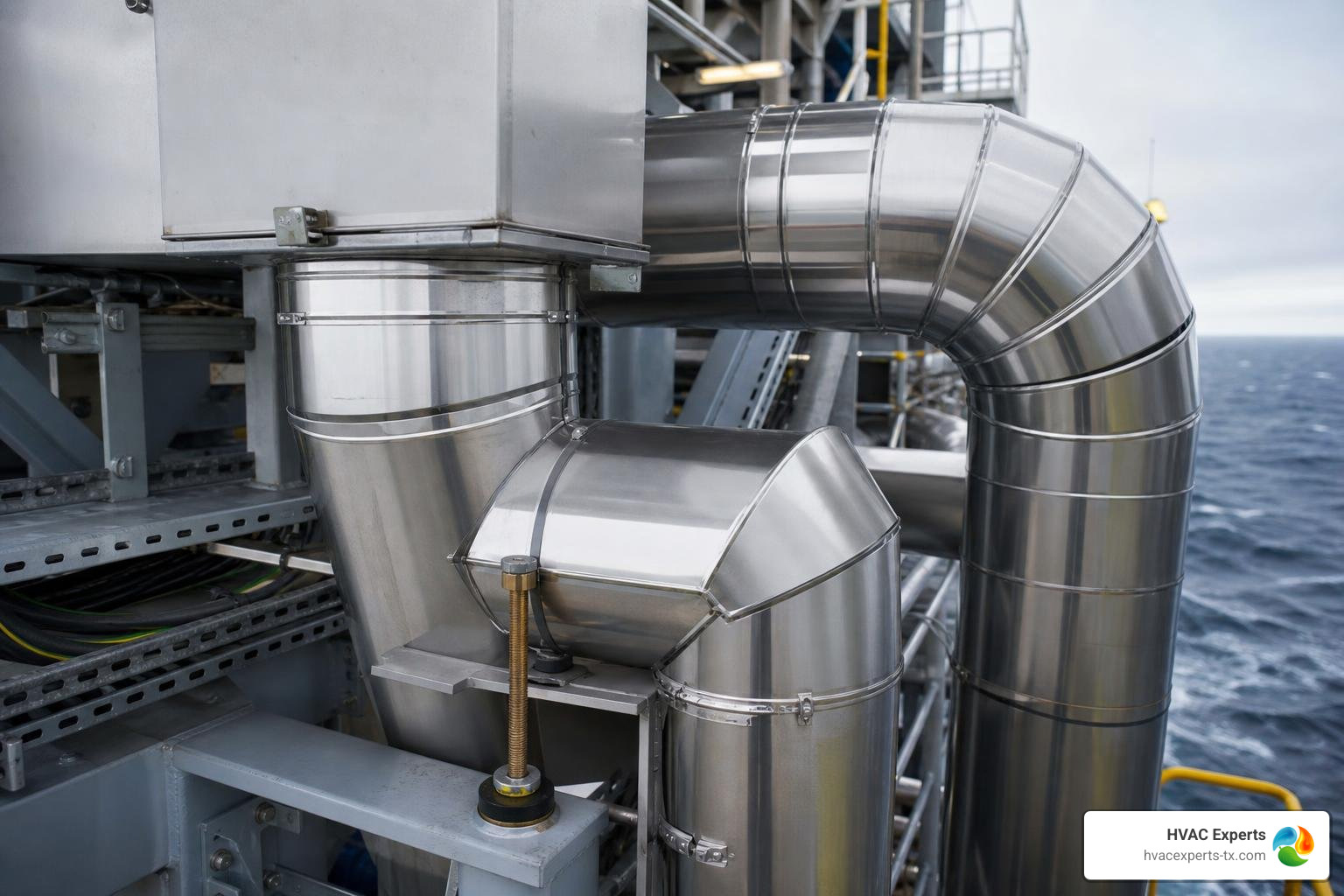
While galvanized steel is a cost-effective choice for internal, non-hazardous, dry areas, it cannot withstand the harsh marine environments or corrosive gas exposure of external rig spaces. That is why we recommend and install marine-grade stainless steel 316L (AISI 316L) for high-exposure areas.
Advanced modular duct systems can use lightweight stainless steel 316L to reduce overall duct weight and speed up installation compared with traditional heavy-gauge welded steel. For drilling rig HVAC ducts, these systems may also be specified with A0 fire-rated construction to support structural and thermal protection during an emergency.
Pressurization, Dilution, and Airflow Control in Rig Ventilation
Airflow on a drilling rig is a game of pressure. By controlling the direction and force of the air, we can literally push hazards away from your crew.
Maintaining Positive Pressure Differentials to Prevent Gas Ingress
To protect living quarters, local equipment rooms (LERs), and drilling control rooms, crews must maintain a positive pressure differential. Keeping these safe zones pressurized at 30 to 70 Pa helps ensure that if a door opens or a minor seal leaks, clean air moves out instead of toxic gas moving in.
To maintain this pressure, we utilize Constant Air Volume (CAV) systems rather than Variable Air Volume (VAV) systems in critical safety zones.
| Feature | Constant Air Volume (CAV) | Variable Air Volume (VAV) |
|---|---|---|
| Airflow Rate | Constant and continuous | Variable based on thermal load |
| Pressure Control | Highly stable and predictable | Dynamic, harder to balance |
| Safety Suitability | Excellent for hazardous pressurization | Good for energy efficiency, poor for safety zones |
| Risk of Failure | Low (fewer moving parts) | Moderate (complex control dampers) |
Dilution Ventilation and Hydrogen Mitigation in Battery Rooms
Battery rooms pose a unique chemical hazard: the buildup of explosive hydrogen gas during charging. To prevent disaster, the HVAC system must keep hydrogen concentrations below 2% by volume.
Our strict battery room ventilation checklist includes:
- Forced Mechanical Ventilation: Relying on natural ventilation is not permitted; dedicated mechanical exhaust is required.
- 12 Air Changes Per Hour (ACH): Continuous airflow to dilute any off-gassing immediately.
- Negative Pressure: Keeping the battery room under negative pressure relative to surrounding areas to prevent hydrogen from escaping into adjacent corridors.
- Spark-Resistant Fans: Exhaust fans must utilize non-sparking materials and explosion-proof motors.
- No Recirculation: 100% of the air must be exhausted directly to a safe outdoor location.
Integrating Safety Dampers and Fire & Gas Detection Systems
Ducts move air through the rig, but without proper controls, they can also spread fire, smoke, or toxic gas.
Blast, Fire, and Smoke Damper Standards
In the event of an explosion or fire, the HVAC ducts must seal shut instantly. We integrate specialized dampers directly into the ductwork to isolate compartments:
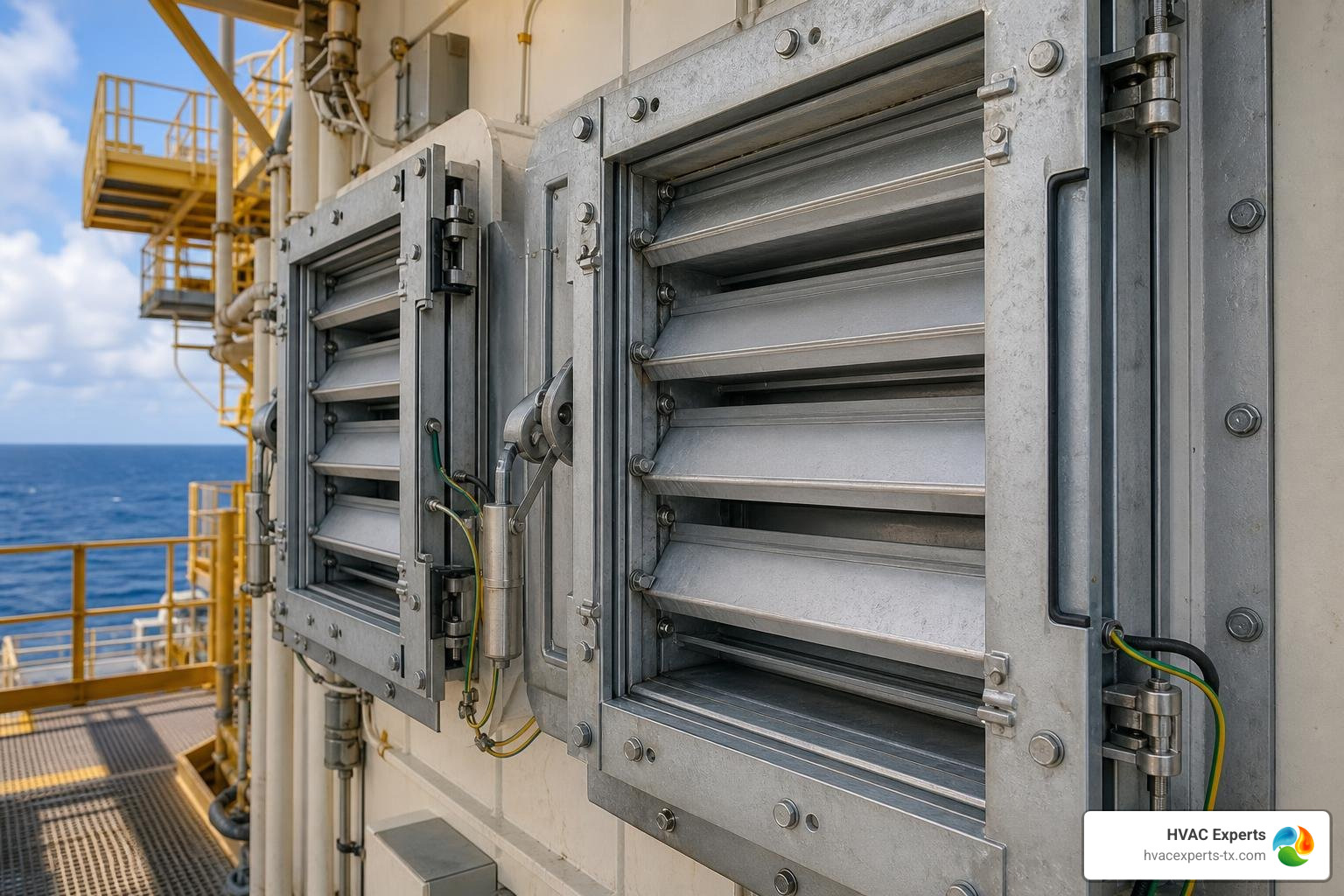
- Fire Dampers: Built to standards like UL 555, these prevent the spread of flame through the ductwork.
- Smoke/Gas Dampers: Because smoke and toxic gases are often more lethal than fire itself, these dampers feature low-leakage seals and pneumatic, fail-safe (open-fail shut) actuators.
- Blast Dampers: Installed on the exterior bulkheads of the rig, these heavy-duty dampers protect the internal ventilation system from the destructive overpressure of an explosion.
Automatic Emergency Shutdown and Isolation Interfaces
Your HVAC system must “talk” directly to the rig’s Fire and Gas (F&G) detection system. When gas sensors or smoke detectors trigger an alarm, the Emergency Shutdown (ESD) system sends a signal to the HVAC control panel.
Within seconds, the supply fans shut down, and the pneumatic isolation dampers slam shut. This rapid response prevents toxic gas or smoke from being pulled into the accommodation blocks or control rooms, giving the crew vital time to reach temporary refuges or evacuation stations.
Optimizing Air Intakes, Filtration, and the Battle Against Dust
Across the Permian Basin, from Odessa and Midland to Big Spring and Pecos, dust is a daily fight. On offshore rigs, salt spray, humidity, and moisture create the same kind of ductwork challenge.
Intake Separation and Exhaust Placement to Avoid Contamination
To ensure the air entering the rig is actually fresh, supply air intakes must be strategically positioned. According to offshore engineering standards, supply air intakes and exhaust outlets must have a minimum separation of 4.5 meters.
Furthermore, intakes must be placed far away from, and upwind of, potential hazard sources such as process vents, engine exhausts, shale shakers, and drilling floors.
Multi-Stage Filtration for Salt, Dust, and Chemical Contaminants
Standard air filters will clog in hours on a dusty West Texas rig site. We design multi-stage filtration systems to handle extreme environments:
- Coalescing Filters / Moisture Separators: Remove heavy water droplets, salt spray, and moisture before they enter the ductwork.
- Pre-Filters: Capture large dust particles and airborne debris.
- HEPA Filters: Remove fine particulates down to 0.3 microns.
- Activated Carbon Filters: Absorb chemical contaminants, odors, and trace gases.
Implementing a high-quality filtration strategy is essential for protecting both your equipment and your crew. Regular maintenance is key, as highlighted in our guide on how HVAC maintenance can improve your air quality.
Overcoming Space Constraints and Maintenance Challenges for drilling rig HVAC ducts
Rig space is incredibly tight. During the design phase, we perform extensive 3D clash checking to ensure ductwork coexists with electrical trays, structural steel, and high-pressure piping.
Because space is limited, accessing ducts for cleaning can be incredibly difficult. Over time, dust, grease, and moisture build up inside the system, creating fire hazards and reducing airflow. If you notice reduced pressure or poor air quality, it may be time to look for the signs you need air duct replacement.
For rigs operating across West Texas, keeping these systems clean is non-negotiable. Learn more about the safety and efficiency risks of dirty ductwork in the dirty truth about your HVAC system duct cleaning.
Redundancy, Testing, and Commissioning Standards
On a drilling rig, HVAC failure can halt drilling operations entirely, costing operators hundreds of thousands of dollars per day in downtime.
100% Standby Redundancy and Emergency Power for Critical Fans
For critical spaces like drilling control rooms, HVAC systems should be designed with 100% standby redundancy. These setups typically use dual-fan arrangements tied into automated controls. Only one fan runs during normal operation; if it fails, the system switches to the standby fan to help maintain cooling, ventilation, and safe pressurization without interruption.
These critical systems are connected to emergency generators with automatic transfer switches, ensuring continuous operation even during a total rig power outage.
Pressure Testing, Earth Bonding, and Structural Supports
Before any HVAC system is handed over, it must undergo rigorous testing and commissioning.
- Pressure Testing: Using recognized duct leakage standards such as DW142, the ductwork is pressurized to confirm leakage stays within safe, specified limits.
- Earth Bonding: Moving air can create static electricity, so each duct section must be electrically bonded to the rig structure to reduce spark risk in hazardous areas.
- Vibration and Structural Support: Drilling rigs generate constant vibration. Ducts need heavy-duty hangers, anti-vibration mounts, and spring supports to help prevent metal fatigue, loosened joints, and premature failure.
Frequently Asked Questions about Drilling Rig HVAC Ducts
Why is positive pressure critical for offshore control rooms?
Positive pressure (typically maintained between 30 to 70 Pa) ensures that clean air is constantly pushing outward from the control room. This prevents toxic gases like hydrogen sulfide (H2S) or flammable hydrocarbons from entering the space, protecting both the crew and sensitive control electronics from damage and corrosion.
What are the minimum air change requirements for hazardous process areas?
Hazardous process areas require mechanical ventilation systems that provide at least 12 air changes per hour (ACH). This high rate of airflow ensures that any minor gas leaks are quickly diluted and exhausted before they can reach explosive concentrations.
How does marine-grade ductwork prevent galvanic corrosion?
When different metals, such as stainless steel and galvanized steel, touch in salty, humid air, electrical reactions can speed up corrosion. Marine-grade ductwork reduces that risk by separating dissimilar metals with non-conductive barriers like Tufnol washers, sleeves, isolation kits, and heavy-duty rubber gaskets. Regular cleaning and inspection also help remove salt, moisture, and debris before they damage the duct system.
Keep Your Rig Running Safely with HVAC Experts
Whether you are operating an offshore platform or a drilling rig in the heart of the Permian Basin—including Odessa, Midland, Greenwood, Big Spring, or Pecos—your HVAC system is a primary line of defense.
At HVAC Experts, we specialize in the design, installation, maintenance, and cleaning of heavy-duty industrial and oilfield HVAC systems. We understand the unique challenges of West Texas dust, corrosive gases, and strict regulatory compliance.
With our 24/7 emergency service and exclusive Diamond Club membership for priority scheduling and discounts, we keep your crew safe and your drilling operations online.
Need professional duct maintenance or a system evaluation? Trust the local specialists. Contact our expert HVAC technicians and schedule professional duct cleaning services. Let us help you win the battle against dust and hazards today!
4.9 · 1,899 Google reviews
Need help at home?
Call 432-272-5636 for a free estimate.