
What is an AC Compressor and How Does It Fail?
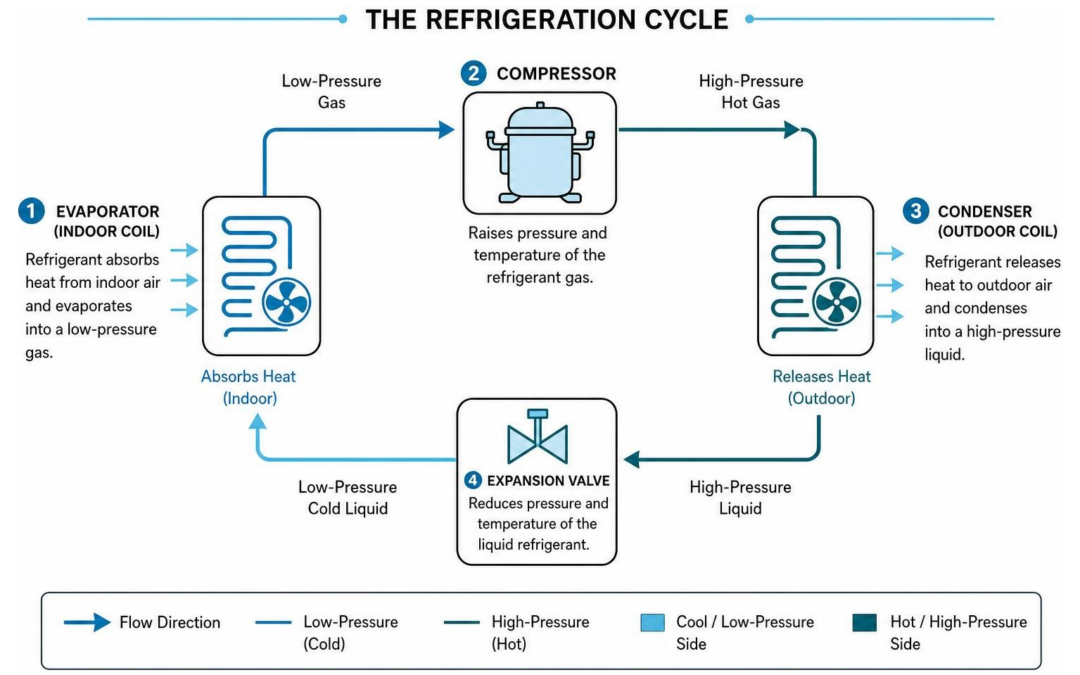
To understand why an air conditioner compressor replacement is such a major event, it helps to understand what this component actually does. Often called the “heart” of your cooling system, the compressor is a powerful pump located in your outdoor condenser unit. Its primary job is to circulate and pressurize refrigerant, which is the lifeblood of the entire cooling cycle.
When your system is running, the compressor takes in cool, low-pressure gaseous refrigerant from your indoor evaporator coil, squeezes it down, and raises both its pressure and temperature. This hot, high-pressure gas is then forced into the outdoor condenser coil, where it releases heat to the outside air and condenses into a liquid. From there, the liquid refrigerant travels through an expansion valve, cools down rapidly, and heads back indoors to absorb more heat from your home.
Because the compressor is constantly under intense mechanical and electrical strain, it relies on several supporting components to function safely:
- The Compressor Motor: The internal motor that drives the pumping action.
- The Capacitor: A small cylindrical device that stores and delivers the electrical jolt needed to start the compressor motor and keep it running smoothly.
- The Contactor: An electrical switch that controls the flow of electricity to the compressor and outdoor fan motor.
When any of these electrical components fail, they place immense stress on the compressor motor. Over time, this can lead to mechanical seizure, burned-out motor windings, or an electrical short-to-ground. If you suspect your system is struggling, it is vital to recognize the signs your AC needs repair Odessa TX before a complete, catastrophic compressor failure occurs.
Warning Signs of a Failing Compressor
An AC compressor rarely dies without dropping a few hints first. Recognizing these warning signs early can save you from being stranded in the sweltering West Texas heat with a completely dead system:
- Warm Air Blowing from the Vents: If your indoor blower is running but the air coming out of your registers is lukewarm, your compressor may not be pumping refrigerant properly. This is one of the classic reasons why your air conditioner is blowing hot air.
- Loud, Unusual Noises: Grinding, screeching, rattling, or loud banging sounds coming from the outdoor unit when it starts up are major red flags. This usually indicates that internal mechanical parts are wearing out, or that the motor mounts have failed.
- Frequently Tripped Circuit Breakers: A failing compressor motor will often experience an electrical short-to-ground, drawing excessive electrical current and tripping your home’s main circuit breaker. If you have to reset your breaker repeatedly to get cool air, stop turning it back on and call a professional immediately.
- Hard Starting or Humming: If you hear a loud humming noise from your outdoor unit but the fan and compressor fail to start, the compressor is struggling to turn over. This is often caused by a failing capacitor, but if left unaddressed, the strain will quickly burn out the compressor motor itself.
The Cost of Air Conditioner Compressor Replacement in 2026
If you have confirmed that your compressor has indeed breathed its last, the next logical question is: How much is this going to cost?
In July 2026, the cost of air conditioner compressor replacement is influenced by several key factors. These include the size of your home, which dictates the system’s tonnage, the type of compressor technology, single-stage, two-stage, or variable-speed, and whether the part is covered by a manufacturer’s warranty.
To give you a clearer picture of what to expect, we have compiled a breakdown of typical costs below.
| System Size (Tonnage) | Compressor Technology | Average Parts Cost | Average Labor Cost | Total Cost (Out of Warranty) |
|---|---|---|---|---|
| 1.5 to 2.0 Tons | Single-Stage Scroll | $500 – $900 | $600 – $1,100 | $1,100 – $2,000 |
| 2.5 to 3.0 Tons | Single-Stage Scroll | $700 – $1,200 | $700 – $1,200 | $1,400 – $2,400 |
| 3.5 to 4.0 Tons | Two-Stage Scroll | $1,000 – $1,700 | $900 – $1,500 | $1,900 – $3,200 |
| 5.0 Tons | Variable-Speed / Inverter | $1,500 – $2,500 | $1,000 – $2,000 | $2,500 – $4,500 |
Home Air Conditioner Compressor Replacement Costs
For residential HVAC systems in West Texas, a professional compressor replacement typically ranges between $1,200 and $3,000 for standard systems. If you have a high-end, high-efficiency variable-speed compressor, that total can easily climb to $4,500 or more.
If your compressor fails while still covered by the manufacturer’s parts warranty, which typically lasts 5 to 10 years depending on whether you registered the equipment, you won’t have to pay for the compressor itself. However, you will still be responsible for the labor fees, refrigerant recharge, and any mechanical permits or disposal fees. Even under warranty, out-of-pocket costs for labor and materials generally run between $600 and $1,200.
Car AC Compressor Replacement Costs
If you are dealing with an automotive AC system rather than a home system, the pricing structure is quite different. Car AC compressor replacement typically costs between $200 and $800 on average, with professional labor adding another $100 to $200.
Unlike a home unit, a car AC compressor is belt-driven by the vehicle’s engine and utilizes a clutch pulley to engage and disengage the cooling cycle. While some car enthusiasts attempt this repair themselves, automotive systems still require legal refrigerant recovery and precise vacuum testing to prevent premature failure.
Compressor Replacement vs. Whole Unit: The Decision Framework
When faced with a repair bill of $2,000 or more, you have to ask yourself: Is it really worth replacing just the compressor, or should I replace the entire outdoor condenser or the whole HVAC system?
To make an educated decision, we recommend using the 50% Rule. If the cost of the compressor repair exceeds 50% of the cost of a complete system replacement, investing in a new unit is almost always the smarter financial move.
Furthermore, you must consider the age of your equipment. In the harsh, dusty, and incredibly hot West Texas climate, air conditioners work incredibly hard. Our guide on how long AC units last in West Texas homes explains how age, maintenance history, and local heat can affect whether a major repair is still worthwhile.
When to Choose Air Conditioner Compressor Replacement
Choosing to replace just the compressor is often the right path if:
- The system is under 10 years old: Especially if the parts are still covered under the manufacturer’s warranty.
- The rest of the system is in excellent condition: If your indoor evaporator coil, furnace/air handler, and ductwork are clean, modern, and working flawlessly, there is little reason to replace them.
- The system uses R-410A refrigerant: R-410A remains widely serviced, meaning a recharge won’t cost an absolute fortune compared to older, phased-out gases.
- Immediate budget constraints exist: If a full system replacement is simply not financially feasible right now, replacing the compressor can buy you several more years of reliable cooling.
When to Invest in a New HVAC Installation
On the other hand, you should strongly consider investing in a complete HVAC installation if:
- The system uses R-22 refrigerant: The production and import of R-22 (Freon) was completely phased out in the United States. Recharging an R-22 system can cost hundreds of dollars per pound, making any major repair on these systems a poor investment.
- The system is over 12 years old: An older system is much more likely to experience subsequent component failures shortly after you replace the compressor.
- You want to lower your monthly utility bills: Modern air conditioners utilize advanced refrigerants like R-454B and boast much higher SEER2 (Seasonal Energy Efficiency Ratio) ratings, which can slash your energy consumption.
- The system is improperly sized: If your current unit has always struggled to keep up or cycles on and off too frequently, a replacement allows you to calculate exactly what size HVAC system your Midland home needs for optimal comfort.
If you decide that starting fresh is the most sensible path forward, a properly designed installation can help you avoid repeat compressor failures, comfort issues, and oversized equipment that short-cycles in the West Texas heat.
Pros and Cons of New vs. Used or Refurbished Compressors
When shopping around for an air conditioner compressor replacement, you may find options ranging from brand-new Original Equipment Manufacturer (OEM) parts to aftermarket alternatives, or even used and refurbished units.
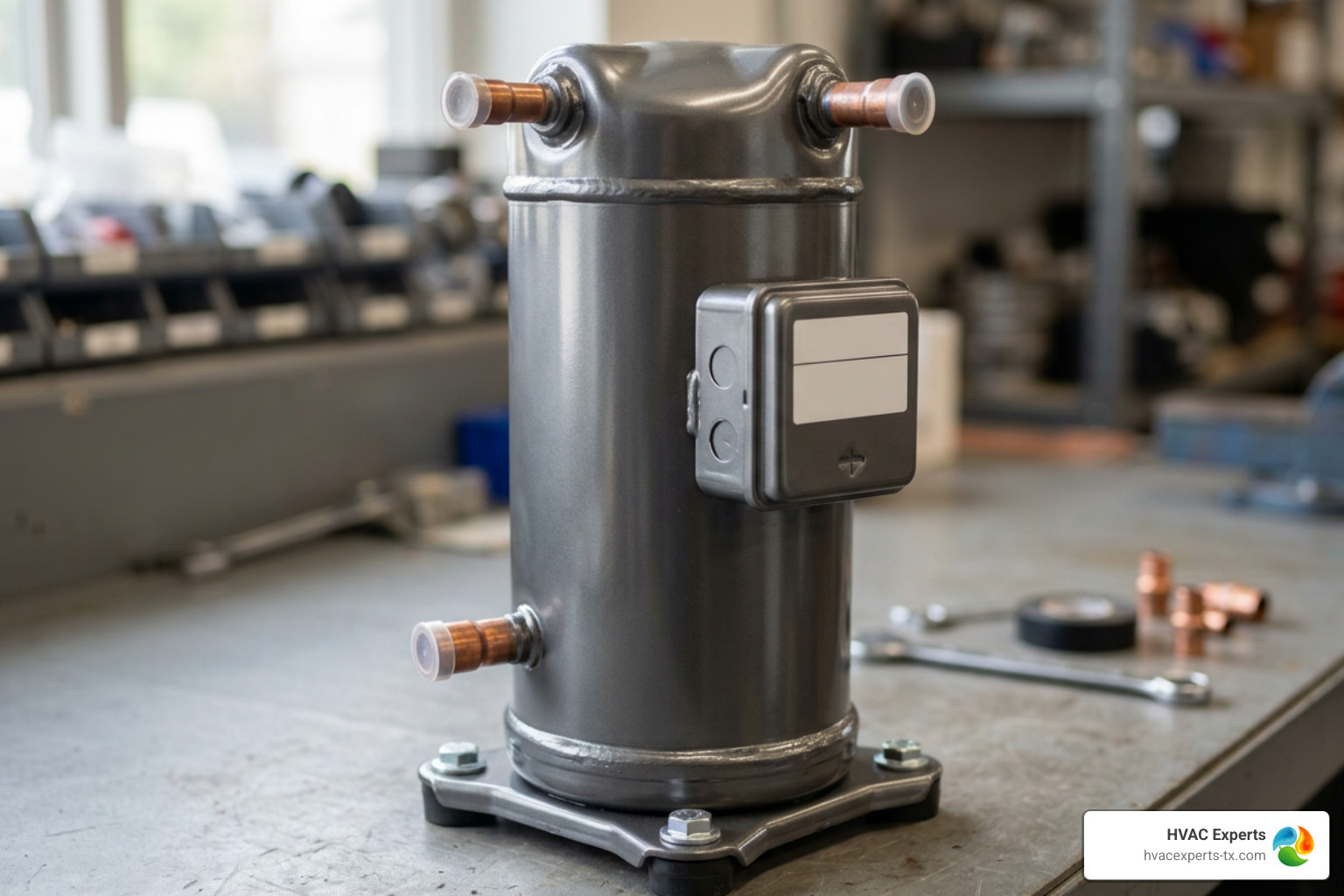
While the lower price tag of a used or refurbished compressor can be incredibly tempting, it is important to weigh the pros and cons carefully before making a decision.
New OEM Compressors
- Pros: Built exactly to your system’s specifications; comes with a robust manufacturer warranty, often 5 to 10 years; offers the highest level of reliability and energy efficiency.
- Cons: The most expensive upfront option.
Aftermarket Compressors
- Pros: Typically cost 20% to 30% less than OEM parts; often readily available; can offer comparable reliability if sourced from a reputable manufacturer.
- Cons: May require slight modifications to mounting brackets or piping during installation; warranty terms may be shorter or more restrictive.
Used or Refurbished Compressors
- Pros: Lowest upfront purchase price; environmentally friendly by keeping functional parts out of landfills.
- Cons: Extremely high risk of premature failure; little to no warranty coverage, often just 30 days; unknown maintenance history; potential internal contamination, such as acid or moisture, that can ruin your entire refrigerant system.
In our professional experience, saving a few hundred dollars on a used compressor is rarely worth the gamble. If a used compressor fails after a month, you will have to pay for the labor, refrigerant, and another compressor all over again.
Why DIY Compressor Replacement is a Dangerous Gamble
In the age of online video tutorials, it is easy to think that an air conditioner compressor replacement is a weekend project you can handle yourself. However, replacing a compressor is not like swapping out a thermostat or a fan motor. It is a highly complex, multi-disciplinary task that requires the skills of an electrician, a plumber, and a high-pressure gas technician.
Here is why attempting a DIY compressor replacement is incredibly dangerous and, in many cases, illegal:
- EPA Section 608 Regulations: Under federal law in the United States, it is illegal to vent refrigerant into the atmosphere. To handle, recover, or purchase refrigerant, you must hold an EPA Section 608 certification. Violating these laws can result in devastating fines.
- High-Voltage Electrical Hazards: HVAC systems operate on 240-volt electrical circuits. A single mistake while testing or disconnecting electrical lines can result in severe electrical shock, electrocution, or electrical fires.
- The Brazing Process: Connecting a new compressor requires using an oxy-acetylene torch to braze copper joints at temperatures exceeding 1,000 degrees Fahrenheit. Doing this safely requires purging the lines with dry nitrogen to prevent internal oxidation, or copper scale, from forming inside the pipe, which would quickly choke and destroy your brand-new compressor.
- Deep Vacuum and Moisture Removal: Once the compressor is piped in, the system must be evacuated using a commercial vacuum pump and monitored with a digital micron gauge. Technicians must perform a “decay test” to ensure the system holds a deep vacuum, typically under 700 microns, and is completely free of moisture and non-condensable gases. Any moisture left inside the system will mix with refrigerant oil to create highly destructive acid.
For these reasons, home and business owners in the Permian Basin should always leave these heavy-duty repairs to certified professionals. If you are experiencing cooling issues, a licensed technician can provide safe, code-compliant AC repair in Odessa and help determine whether the compressor, capacitor, contactor, or another component is the real problem.
How to Extend the Lifespan of Your New Compressor
Once you have invested in a new compressor, you want to make sure it lasts as long as possible. A high-quality compressor can easily last 12 to 15 years, but only if the surrounding system is properly cared for.
To protect your investment and prevent premature failure, implement these essential maintenance practices:
- Replace Air Filters Regularly: A clogged air filter restricts airflow across your indoor evaporator coil. This causes refrigerant temperatures to drop, which can send liquid refrigerant back down the suction line into the compressor, a phenomenon known as “liquid slugging” that will quickly destroy the compressor’s internal valves.
- Keep the Condenser Coils Clean: Your outdoor unit needs to release heat efficiently. If the condenser coils are caked in West Texas dust, dirt, or cottonwood seeds, the compressor has to work twice as hard and run much hotter to cool your home, leading to rapid electrical and mechanical wear.
- Install a Whole-House Surge Protector: Power surges from lightning storms or utility grid fluctuations can instantly fry the delicate electrical windings inside your compressor motor. A dedicated surge protector at your outdoor disconnect box is a very cheap way to protect a very expensive component.
- Address Electrical Issues Immediately: If your AC is humming, clicking, or struggling to start, do not ignore it. A weak capacitor or a pitted contactor will deliver unstable voltage to your compressor, causing it to overheat and fail prematurely.
Skipping these simple steps can have severe financial consequences. In Odessa’s dusty, high-heat climate, the real cost of skipping AC maintenance often shows up as higher energy bills, repeat repair calls, and a shorter compressor lifespan.
Frequently Asked Questions about AC Compressor Replacement
Can a bad capacitor cause compressor failure?
Yes, absolutely. The capacitor acts like a battery that provides the electrical boost needed to start and run the compressor motor. If the capacitor is weak or failing, the compressor will struggle to start, drawing excessive current and overheating. If left unaddressed, this constant electrical strain will quickly burn out the compressor’s internal motor windings.
Replacing a failing capacitor is a routine, inexpensive repair. Keeping capacitors and contactors in good working order helps protect your compressor from catastrophic damage and can prevent a much more expensive repair later.
Does homeowners insurance cover air conditioner compressor replacement?
In most cases, no. Homeowners insurance is designed to cover sudden, accidental damage caused by covered perils, such as fire, lightning strikes, or severe vandalism. It does not cover normal wear and tear, age-related deterioration, or lack of maintenance.
However, if your compressor was fried by a documented lightning strike or a sudden, severe power surge that damaged other appliances in your home, your insurance policy might cover the replacement cost, subject to your deductible.
How long does it take a professional to replace a compressor?
A professional air conditioner compressor replacement typically takes between 4 and 8 hours to complete. The process is highly detailed and cannot be rushed.
The technician must safely recover the old refrigerant, cut out the failed compressor, clean the system lines, especially if a “burnout” occurred and left acidic oil behind, braze the new compressor and liquid-line filter-drier into place, perform a high-pressure nitrogen leak test, pull a deep vacuum to remove all moisture, and finally charge the system with the exact weight of refrigerant specified by the manufacturer.
Conclusion
Facing an air conditioner compressor replacement can be stressful, but you don’t have to navigate it alone. At HVAC Experts, we are dedicated to helping homeowners and businesses across Odessa, Midland, and the surrounding Permian Basin areas find the most cost-effective and reliable solutions for their cooling needs.
Whether you need a fast compressor replacement to get your system back up and running, or you decide it’s time to upgrade to a highly efficient new system, our team of certified professionals is here to help. We proudly offer 24/7 emergency service for those blistering summer nights when you need us most, and our Diamond Club membership provides priority scheduling, regular maintenance, and valuable discounts to keep your system running smoothly year after year.
Don’t sweat through another hot day. Contact our professional AC compressor replacement technicians at HVAC Experts today, and let us bring the cool comfort back to your West Texas home!